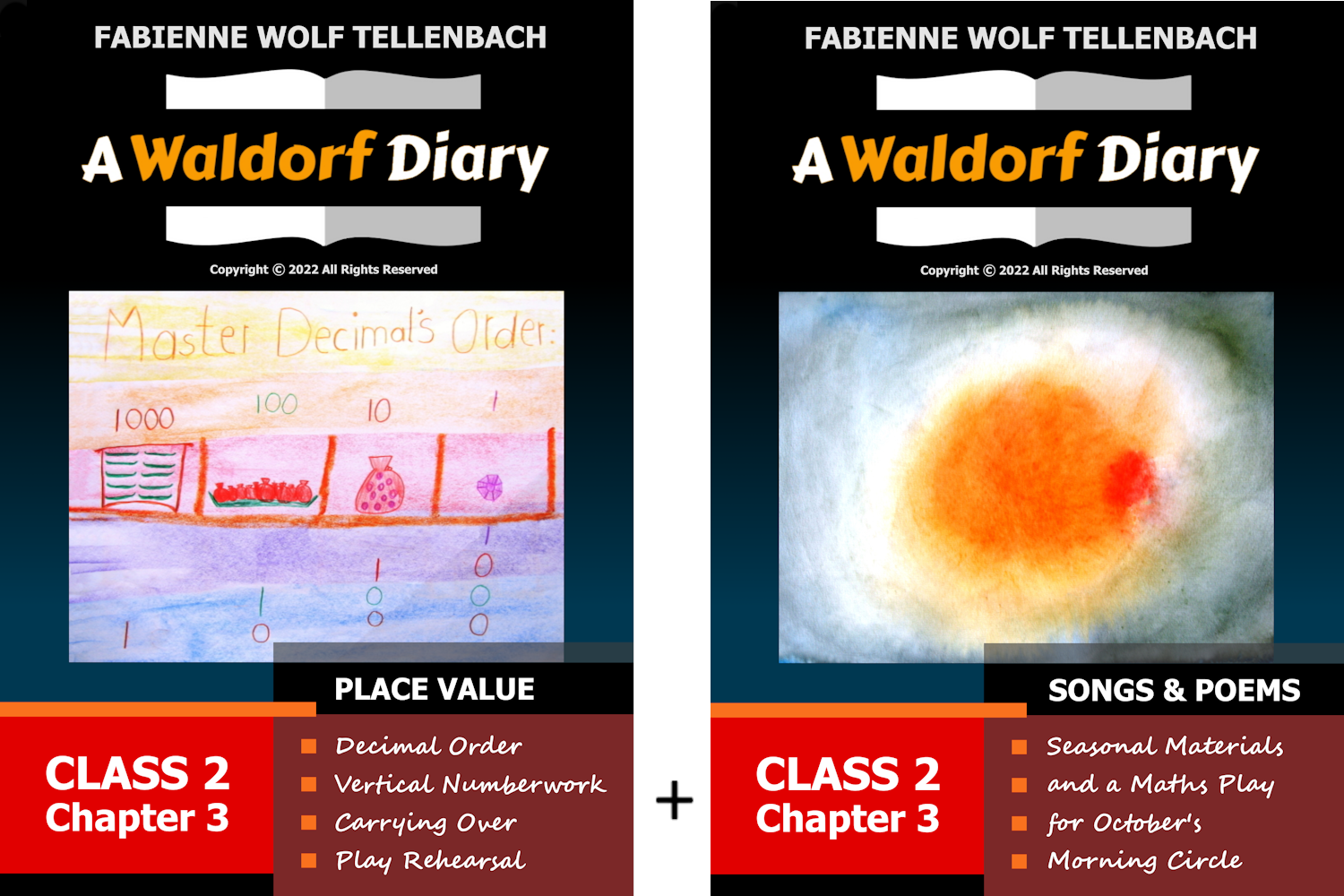
Alongside the practice of decimal place value, progressively cursive handwriting and drawing without contour lines, Class 2 explores another important step in the children’s development.
At this age, they begin to take an interest in questions of right and wrong. Fairness matters. Kindness matters. The children wonder what makes someone worthy of admiration and trust.
The Second Year: Awakening the Moral Sense
What is good, what is bad, and why? These are profound questions, and the children long for answers.
Rather than discussing morality in the abstract, Waldorf education approaches these questions through stories.
The brief, often humorous fables of Aesop are wonderfully suited to this age. Animal characters with strengths and shortcomings let children recognise human behaviour without feeling lectured or judged.
Story after story, they experience natural consequences of honesty and deceit, courage and fear, generosity and selfishness. Fables speak directly to the heart, where their wisdom remains after the story details have been forgotten.
Literacy in Class 2
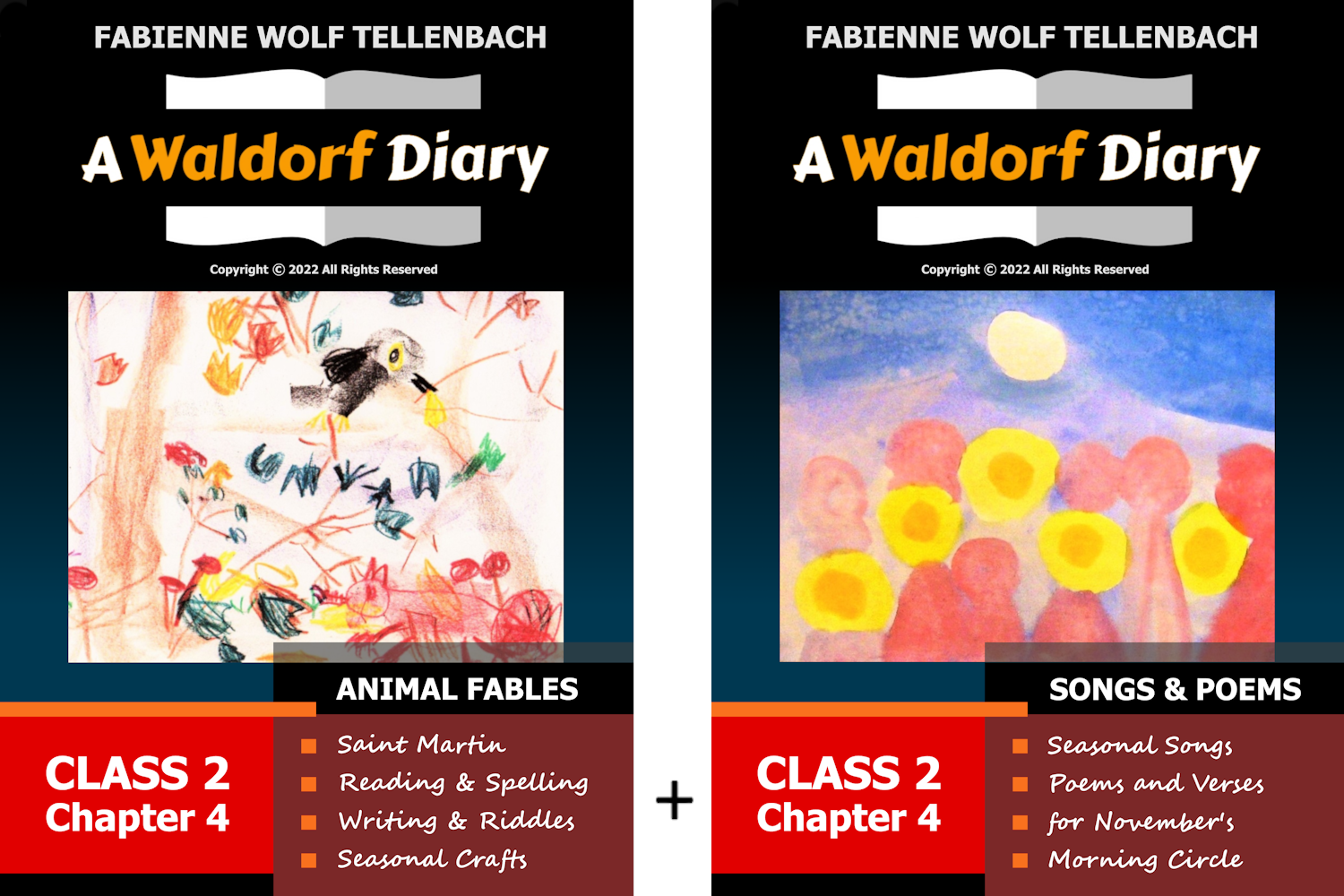
Fables, being concise and memorable, provide ideal material for the practice of writing and reading.
The capital letters introduced in Class 1 are now joined by “little cousins” as the children gradually move into flowing cursive handwriting. Short summaries are carefully written and illustrated, allowing literacy to grow hand in hand with artistic expression.
Reading ability varies most widely at this age, so the classroom bookshelf is stocked with books for every level.
Children learn naturally from one another. Those who already read confidently are sometimes invited to help a classmate through paired reading, and they notice how helping a reading-buddy strengthens their own learning.
When Learning Comes Home
Although there is no formal homework in Class 2, many parents notice that their child spends time at home repeating things done at school.
Acting out fable stories, modelling a candleholder, picking out a familiar tune on recorder or piano, inventing form drawings, experimenting with “big numbers” and “little letters” … all the while singing and reciting items from the Morning Circle.
In this unexpected way, the practice of learning continues at home; not because it has been assigned, but because it has become part of the child’s inner life.
There could hardly be a better kind of homework.
The Lives of Saints
A second block, later in the year, picks up the topic of mankind’s moral faculty with the question: What kind of person is remembered with gratitude, even centuries later?
St Michael, St George, St Martin, St Nicholas and St Francis illuminate different human qualities: courage, generosity, compassion, steadfastness, humility and selfless service.
Without analysing these stories or debating historical accuracy, they are told simply as living pictures that invite admiration, reflection and heartfelt questions.
An emerging understanding is confirmed, story by story: A saint is someone who embodies goodness in exemplary form.
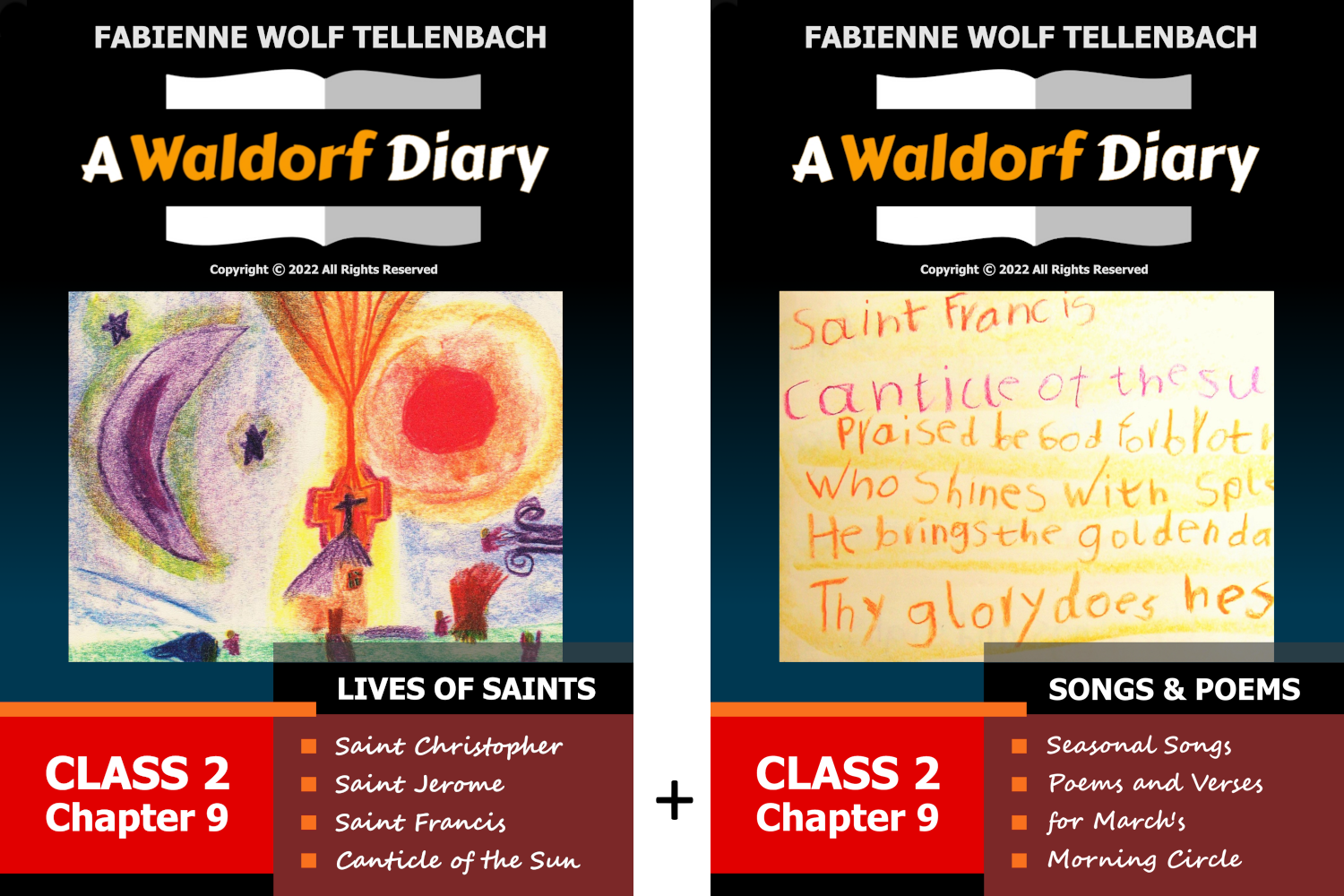
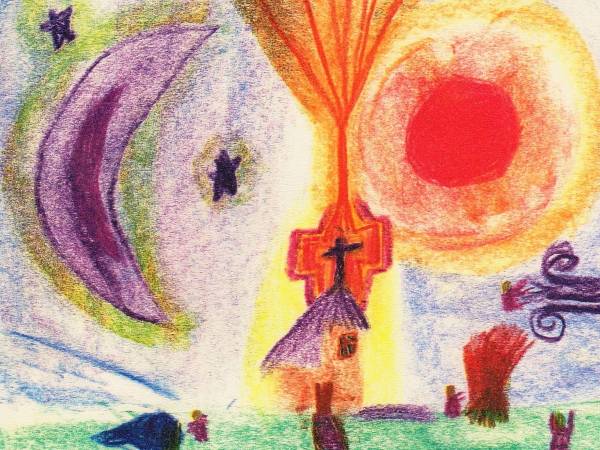
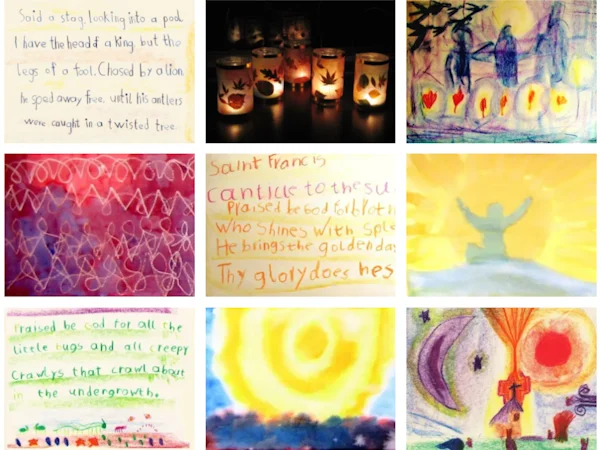
St Francis’s Canticle of the Sun, performed both in its original Italian and in contemporary English, becomes a joyful highlight of the year. Its language often echoes in the children’s creative writing, showing how deeply its words took root.
Experience First, Analysis Later
Throughout the eight years of the Lower School, understanding begins with a thoughtfully prepared learning experience.
Adult analysis, intellectual interpretation, critical judgements and personal opinions are avoided, for these belong to the teenage years and the Upper School.
Historical figures such as saints are described as living human beings rather than topics for critical discussion. And visualising their life story in inner picturing strengthens the imagination.
Experience first, analysis later is an important motto for all our teaching in these years.
In the Lower School years, legends and original accounts from historic sources are presented as a lively picture that speaks to the children through an emotional experience. Personal opinions are never demanded before inward responses have had time to grow.
As the children mature, many of these early impressions will return with fresh meaning. What first touched the heart will later be understood by the thinking mind.
Nurturing the Inner Life
Children of this age respond readily to beautiful hymns, verses and songs of praise. Through them they discover feelings of gratitude, reverence and wonder that arise naturally during these years.
Rather than presenting theological explanations or fixed doctrines, the aim is to nurture an inner awareness that truth, beauty, goodness and love are realities worth seeking throughout life.
Questions about faith, religion and philosophy will naturally broaden during the years ahead. For now, the stories themselves provide a spacious framework within which children can experience these questions inwardly and begin forming their own relationship with the spiritual dimension of life.
A Quiet Conviction
Children take reassurance from their teacher’s calm confidence that life has meaning beyond immediate appearances.
Gradually, almost without noticing, they arrive at a simple but deeply felt conclusion: Our choices matter. Kindness matters. Courage matters. Doing what is right matters.
Few stages of childhood are as naturally open to this discovery as Class 2, and it quietly becomes one of the year’s most enduring gifts.
A WALDORF DIARY – the classroom log that makes the art of Waldorf teaching visible