Alongside the study of fractions, local geography, Man and Animal and increasingly independent work, Class 4 marks another important step in the children’s development.
The Fourth Year: Learning to Direct One’s Strength
Working to build a new sense of security during the previous year, they now meet the world with growing confidence, energy and enthusiasm. Friendships become livelier, opinions stronger and the desire to test themselves more apparent.
The spirit of this age group is wonderfully reflected in the Norse myths. Very different from the Bible stories of Class 3, these tales present a world filled with powerful beings whose courage, wisdom, humour, stubbornness and mischief that holds up a mirror to the children’s nascent awareness of their own inner life.
Like the earlier Bible stories, these myths are narrated as a significant spiritual description of soul-imagery which lets us feel deeply involved in each story.
Norse Myths and Legends
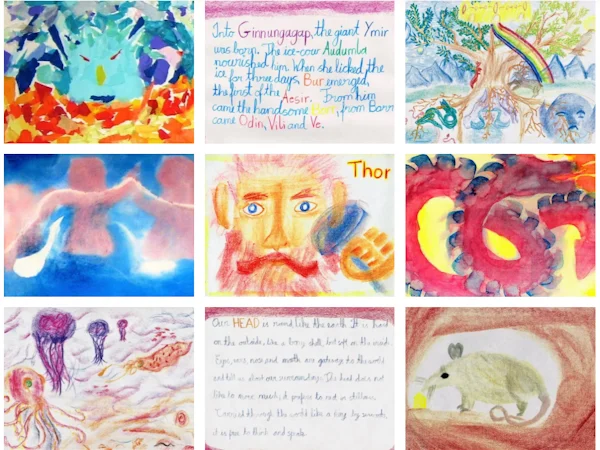
This age group loves to hear of the mighty World Ash Yggdrasil with its nine homeworlds that are peopled by brutal frost giants and hideous trolls, fair elves and cunning dwarves.
A dragon dwells among its roots, the gods in Asgard above, and humankind lives in Midgard, the realm in between.
Wise Odin, fierce Thor, gentle Freya, beautiful Baldur, wild Skadi and sly Loki – the characters of the Norse gods are a mirror for the children’s soul forces as they wrangle and clash, hold council, forge alliances or negotiate a truce.
These gods are not presented as moral examples to imitate. They are mythical expressions of courage, strength, loyalty, cunning, generosity and conflict, and in their adventures the children encounter aspects of their own developing personality.
The Right Time for Fractions
Only now, quite a bit later than other schools, do we introduce and explore the concept of parts smaller than 1. This has two advantages:
Firstly, the child is not ready to fully understand the nature of fractions before the crisis of the ninth year. Its soul must first have lived through this fragmenting of its own inner world.
Secondly, the slightly older child understands the inverse nature of fractions far more readily. Earlier, fractions are often experienced as a confusing concept, whereas now it appears both logical and satisfying.
Having passed through the important developmental changes of the previous year, the children are inwardly ready to grasp the relationship between the whole and its parts, and confidence grows where frustration might otherwise have taken root.
Form Drawing in Class 4
If the classroom can sometimes feel lively and boisterous, form drawing provides a beautiful counterbalance.
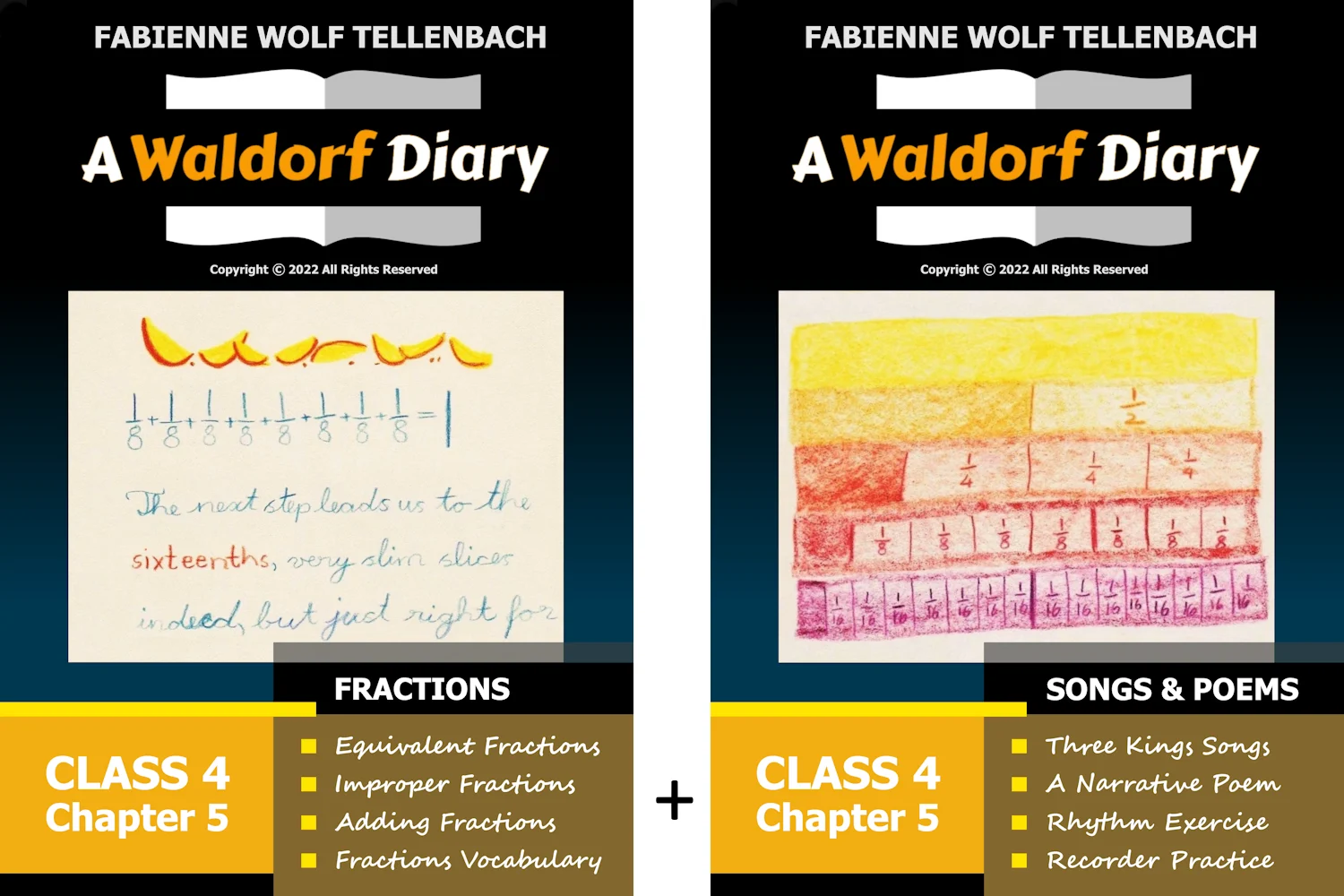
The flowing paths of Nordic knotwork demand patience, concentration and careful observation. Every crossing must be followed with complete attention until the entire pattern emerges as a harmonious whole.
Quietly and almost unnoticed, the children learn to exercise one of the year’s most important new capacities: self-control through purposeful activity and creation.
The World Around Us
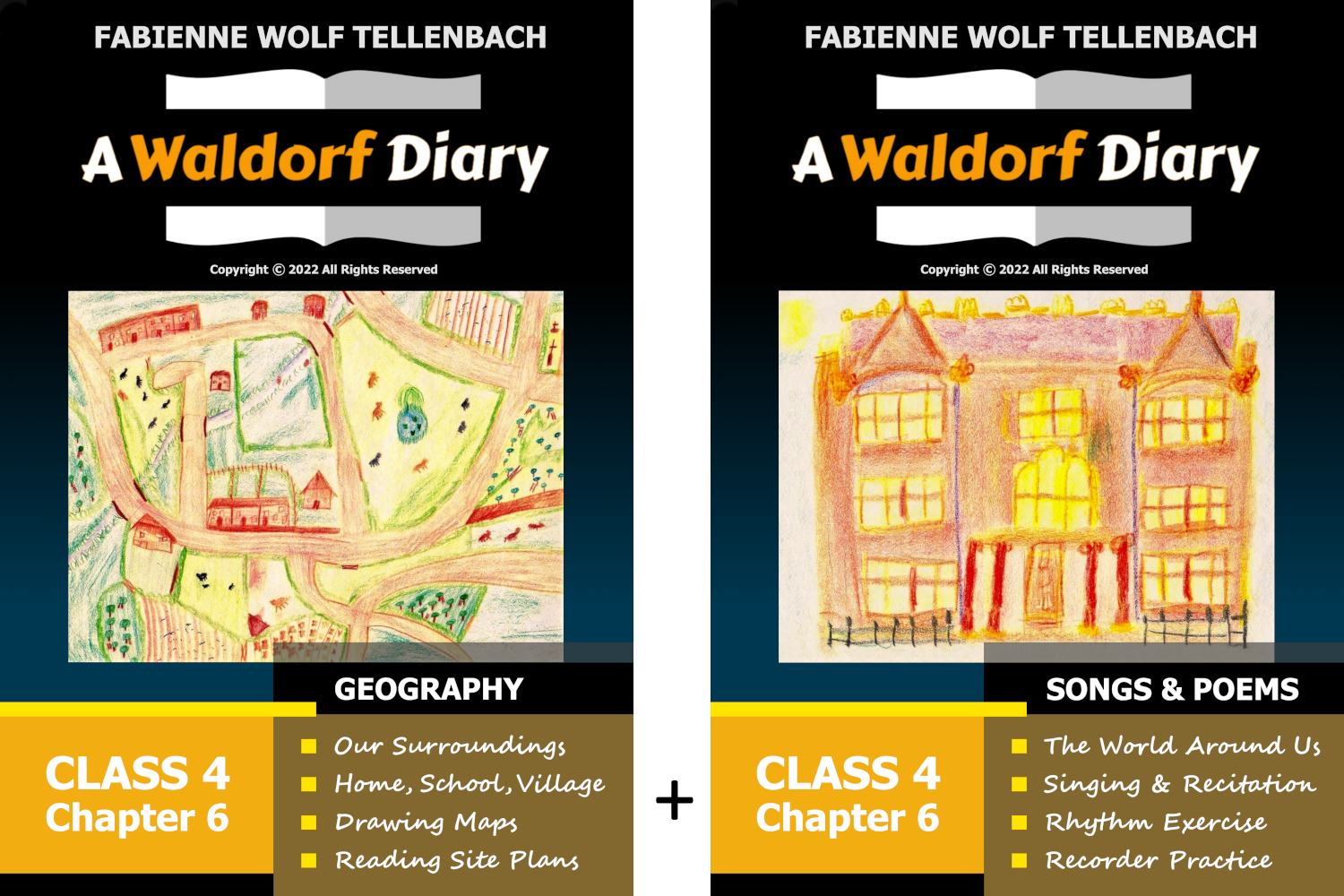
A more conscious awareness of the familiar environment is achieved with a study of local geography, a block also known as home surroundings. This new topic invites the children to look with fresh eyes at the landscape they know so well.
Fields, rivers, hills, villages and towns become subjects of careful observation, and the region they inhabit begins to reveal its own character, with first pictorial impressions of its history.
This is the ideal moment to introduce the fountain pen, because both spelling and cursive handwriting have now developed sufficient fluency for its more demanding use.
Homework as a New Skill
First small tasks of homework, set occasionally and at irregular intervals, now aim to strengthen the all-important faculty of self-management.
Such homework is not given “to learn more”. Its intention is to recreate the task-oriented focus of the classroom at home and out of one’s self-directed willpower.
The children gradually learn how to organise themselves and complete a task by carrying into their home environment the work ethic and focus they practise at school.
Like every worthwhile ability, this takes patient repetition. And the goal is not perfection but steadily growing independence.
This is not easy for most children and will remain a challenge for years to come. Even so, homework is regarded as yet another skill that needs patient practice.
Old Norse Culture
Later in the year, the Norse theme returns with a study of the old Viking culture with its alliterative poetry.
The children recite passages from the Poetic Edda, discovering the power of its rhythms as they speak dramatic lines of Ragnarök strongly and with proper feeling.
Powerful images of “the mighty doom of triumphant gods” speak to them, and doom becomes a favourite word as the children decorate their drawing of a knotwork serpent with a message in runes.
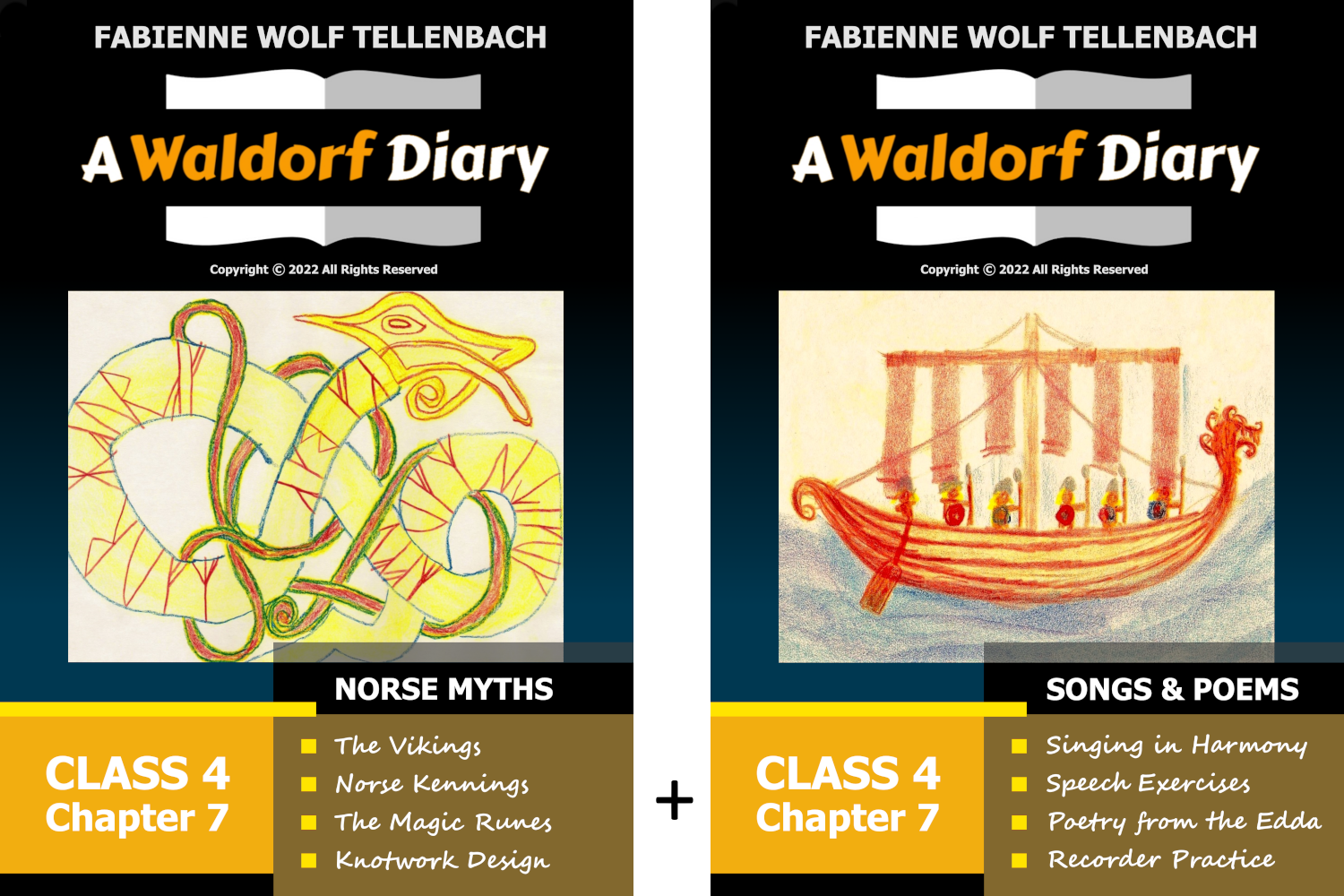
Learning the runic alphabet also provides the unexpected means to write secret messages, which appeals greatly to this age group.
Their wish to emulate Norse warriors in doing battle is met with the strategic Viking board game Hnefatafl. It lets the children pit their wits against each other and channels their love of a challenge into thoughtful planning.
To provide balance, the social art of folk dancing is practised for its spirit of neighbourliness and inclusion. In this activity, strength finds expression through cooperation, rhythm and shared enjoyment.
Reading with Confidence
A reading event to celebrate World Book Day with an audience of invited family members demonstrates that the children read very well indeed. This shared experience can become a memorable highlight of the year.
Parents who worried if their children would “catch up” after Waldorf’s later introduction to literacy now hear confident, expressive readers who have grown naturally into the written word, and earlier anxieties fade away.
Achievements and Challenges
Towards the end of Class 4, a general blossoming of skills and talents can be observed.
The children work more independently than before, though not necessarily as quietly. As friendships become increasingly important, lively conversations are never far away. Established good habits begin to slip and need reviewing.
Learning now requires something new. The essential focus for listening and learning is no longer given by childhood itself. After the “Age of Imitation” (from birth to around age 7), focusing the mind becomes a conscious choice.
The most meaningful achievement of Class 4 is the discovery that they can direct their growing strength with purpose, confidence and self-control.
A WALDORF DIARY – the classroom log that makes the art of Waldorf teaching visible