Alongside the first steps in form drawing, literacy and numeracy, Class 1 has another, less obvious curriculum. A group of individual children begins the long journey towards becoming a class – a group that in larger Waldorf schools will stay together for up to twelve years.
The First Year: Building a Learning Community
During their first year at school, children have a deep need to observe one another as well as their teachers. They gradually discover different personalities, abilities, temperaments and ways of approaching each task.
Some are loud and daring, others shy and quiet; some are lightning-quick, others take their time. Certain classmates enjoy being in the spotlight, others are happiest working in the background. Between these natural poles lies an endless variety of individual character.
Helping a diverse group grow into a caring and respectful class is one of the most important tasks of the year.
Guided by the calm, consistent authority of the class teacher and supported by specialist colleagues, this process unfolds gradually through shared experiences, successes and occasional setbacks.
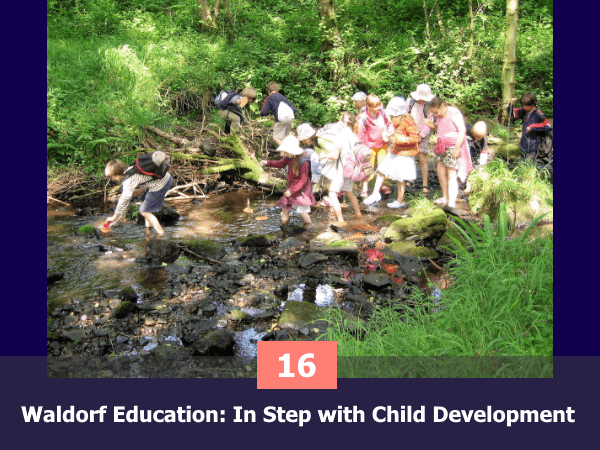
Beginning Class 1
The year opens with profound yet wonderfully simple experiences that prepare the ground for recognising qualities and relationships.
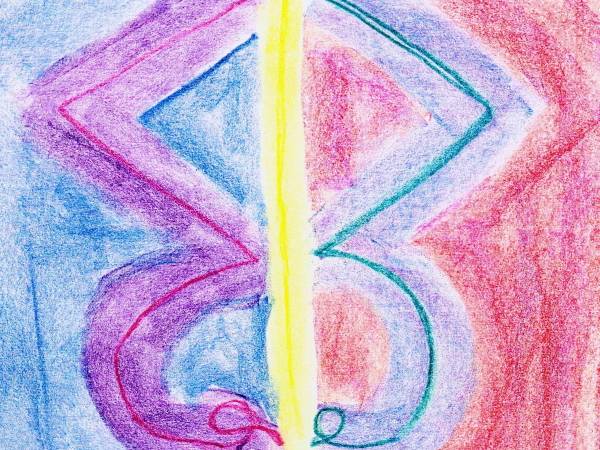
Straight line and curve, the two fundamental elements found in every shape around us, are explored through form drawing. Vertical symmetry forms, in particular, connect the children with their own uprightness and the balance of the human body.
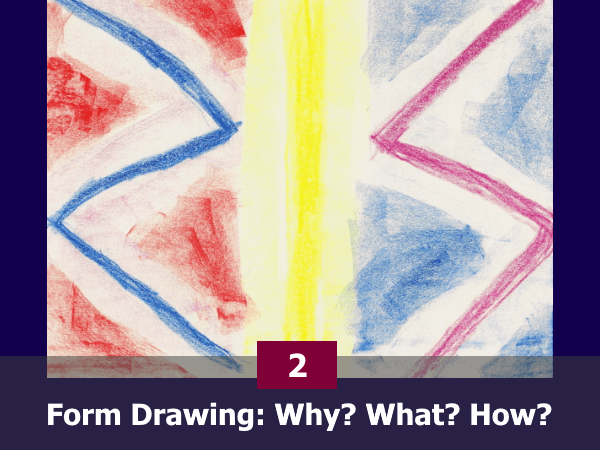
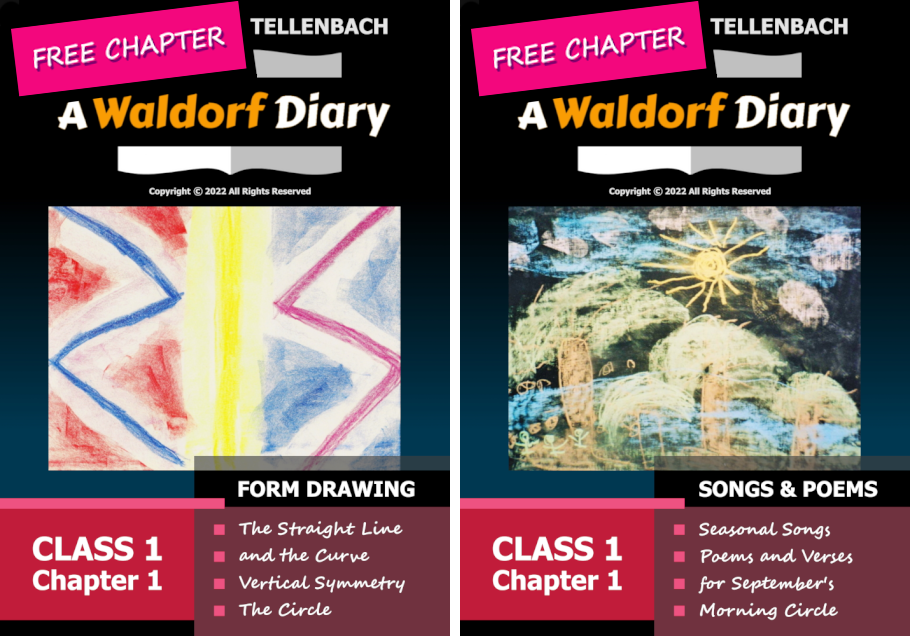
Later in the year, when half of a symmetry form is exchanged with a friend’s, each child completes the other’s design with remarkable ease. A quiet exercise in observation has become an experience of cooperation.

Literacy and Numeracy
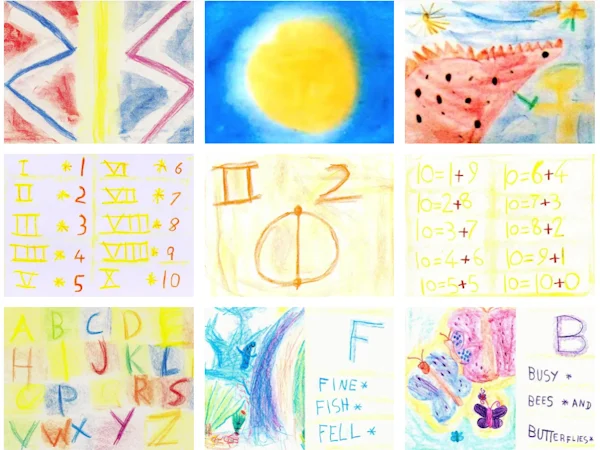
Stories, pictures and artistic activity accompany the introduction of every letter. As the children illustrate stories and discover letter forms hidden within them, reading and writing emerge from meaningful experiences rather than abstract symbols.
At the start of the year, an active recall activity may bring the sound of a discovered letter alive in the soul more deeply as its letter story is mimed by the whole class while the teacher retells the core passage, slowly and with suitable eurythmic gestures. The sound of the first letters introduced can thus be experienced together through movement, the moral story content is revisited and the letter sound linked purposefully to its written shape.
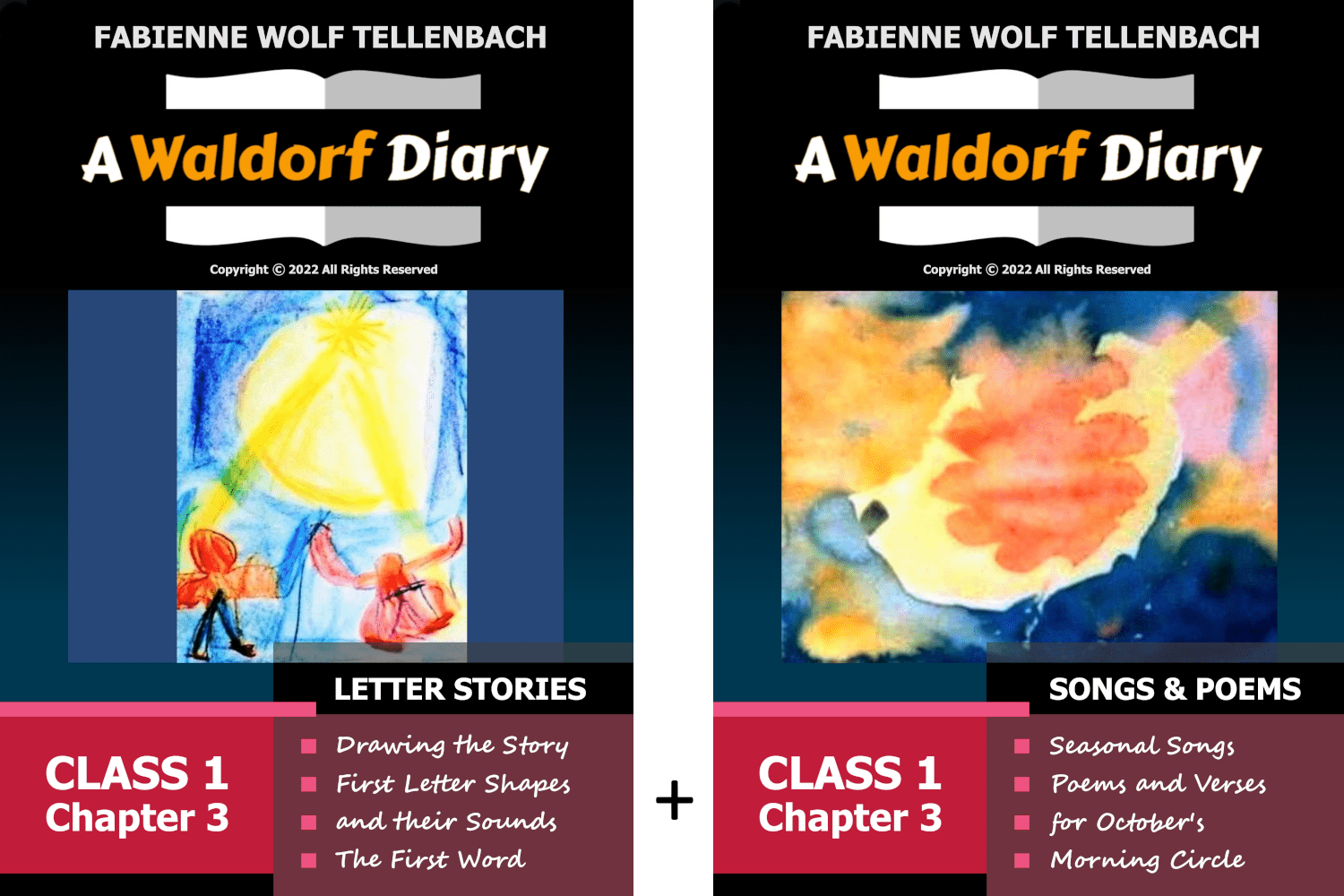
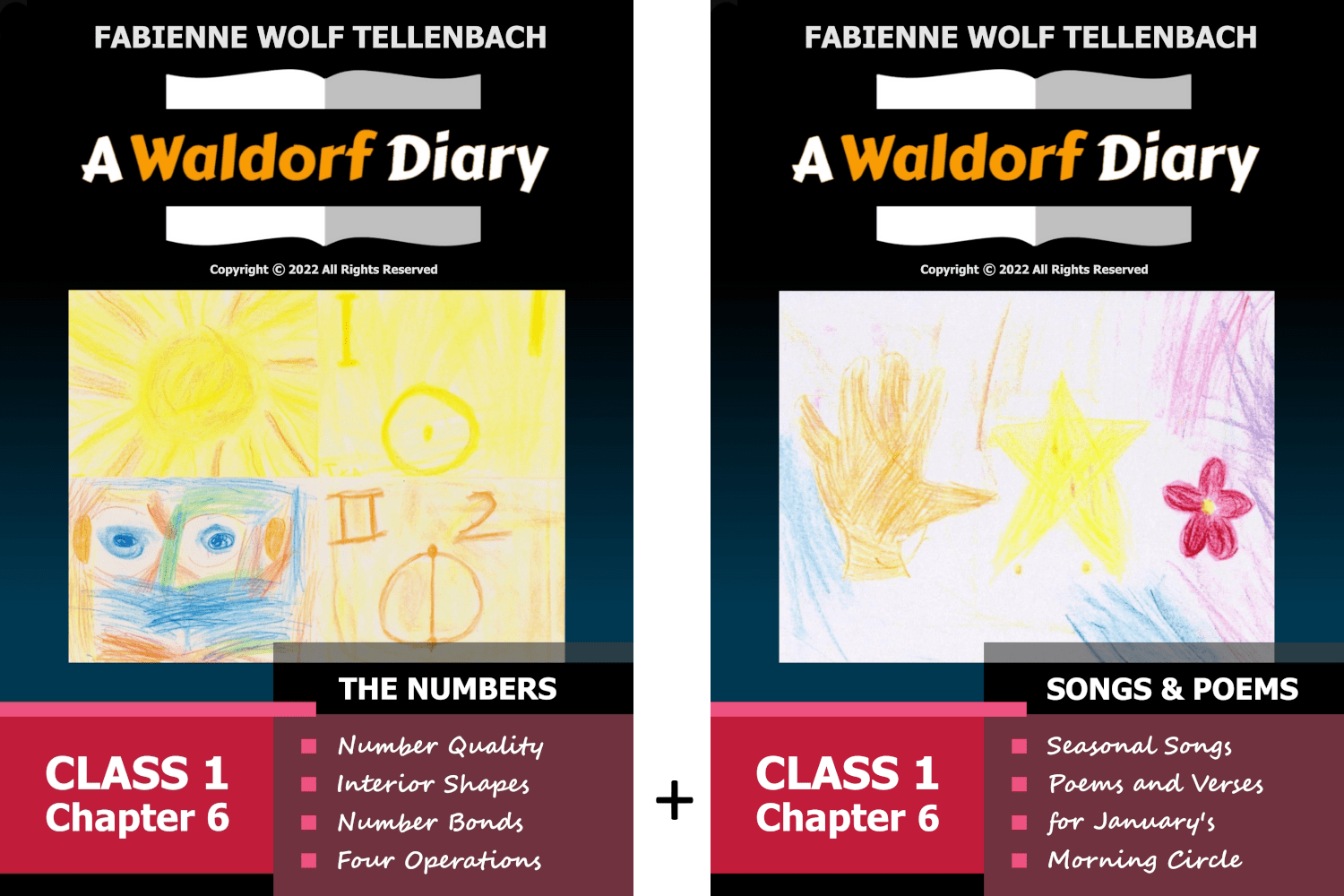
Numbers are introduced in a similarly living way. Before letters and numerals become symbols on a page, they have already become meaningful experiences that strengthen memory, imagination and empathy.
Assessment in Class 1
The emphasis during the first year is not on measurable achievement but on healthy development. There are no tests, marks or homework, no competitions for being the best.
Success is acknowledged through thoughtful descriptive praise rather than comparison, and mistakes are seen as a natural part of learning.
Children who learn more slowly remain with their class of mixed abilities. Something that is not fully understood today may become clear tomorrow – or next month, or even next year.
Rather than asking who can and who cannot do something, the teacher presents each lesson in a way that allows every child to participate and make progress at an individual pace.
Individual speed of learning is regarded as the norm.
Differentiation and Inclusion
Encouraging engagement with each task in turn, everything is done as a group and each child can participate with joyful interest, regardless of their current level of skill and confidence.
Repeated opportunities, patient guidance and plenty of time help each child overcome challenges and develop new abilities.
When children experience themselves as valued members of the group, they become increasingly willing to challenge themselves – not for praise or competition, but for the quiet satisfaction of doing their best.
Feeling included and their contributions valued, all respond eagerly to the expectation that they try to do their best. And as an unspoken feeling of “Look what we can do!” develops among the group, it builds a shared sense of security.
An Important Milestone
One of the most rewarding moments of Class 1 cannot be planned: the first true class conversation.
One child contributes to the topic of the moment while the others listen. Without raising a hand, another member of the class adds something relevant, then a third child contributes, and the conversation continues naturally. No one interrupts. No one competes for attention.
And all notice that this feels very good.
Such a class conversation would have been impossible at the beginning of the year, but now the children have become aware of each other. They accept the established rules, understand the role of listening and speaking, trust that they will be heard and are happy to let others enjoy the attention in turn.
For the teacher, this unexpected moment means far more than a pleasant classroom conversation. It is the clearest sign that a collection of individuals has begun to grow into a true learning community.
A WALDORF DIARY – the classroom log that makes the art of Waldorf teaching visible



Man möchte am liebsten auch wieder Schüler sein, lernen ohne Angst und mit Freude. Einfach genial!
Schön, das zu hören! Ich danke dir für dein Interesse und deine Anteilnahme an meiner Arbeit.