Alongside the introduction of geometry, the work with percentages and ratios, the geography of the home continent and the study of the Roman world, Class 6 marks another important turning point in the children’s development. As teenage begins, their growing capacity for logical thinking seeks new ways of understanding both themselves and the world around them through quantifiable facts.
The Sixth Year: Discovering the Scientific Mind
Having journeyed through ancient cultures the year before, we now begin to investigate laws that underlie nature, rational thought and human society.
Scientific subjects turn the attention of Class 6 from mankind’s original focus on the spirit realm towards its historically recent study of the physical environment.
Laws of geometry are discovered through careful construction. Laws of nature are found in physics and geology. Laws created by human beings are central to the history of Rome, where justice and public responsibility sum up the civic virtues.
Throughout the year, observation, evidence and logical thinking steadily grow and take their place alongside imagination as trusted guides to understanding.
A New Stage of Development
This change is in step with the onset of puberty that brings a sense of heaviness to the body, feelings of doubt to the soul and a need for rational enquiry to the mind.
The harmonious balance of the Class 5 child, achieved in overcoming the crisis of the ninth year, is about to be upset anew as the twelfth year sees the formerly unquestioned unity of body and mind separate into a keen awareness of inner and outer self.
These two selves are often experienced as incongruous, which results in a new set of questions – and sometimes in problems – regarding identity, belonging, self-worth, self-acceptance and sexuality.
This unsettling time with its strong and quickly changing emotions signals the awakening of the capacity for independent judgement.
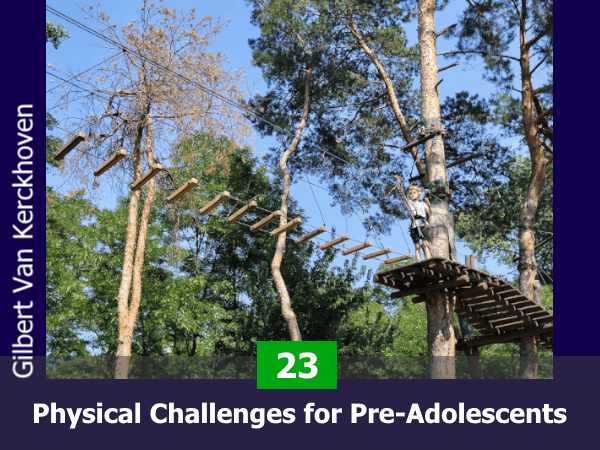
Training the Thinking Mind
In lessons, employing the faculty of logic helps to create a calming distance to the newly turbulent emotional life and invites the children to engage more consciously with dispassionate reasoning.
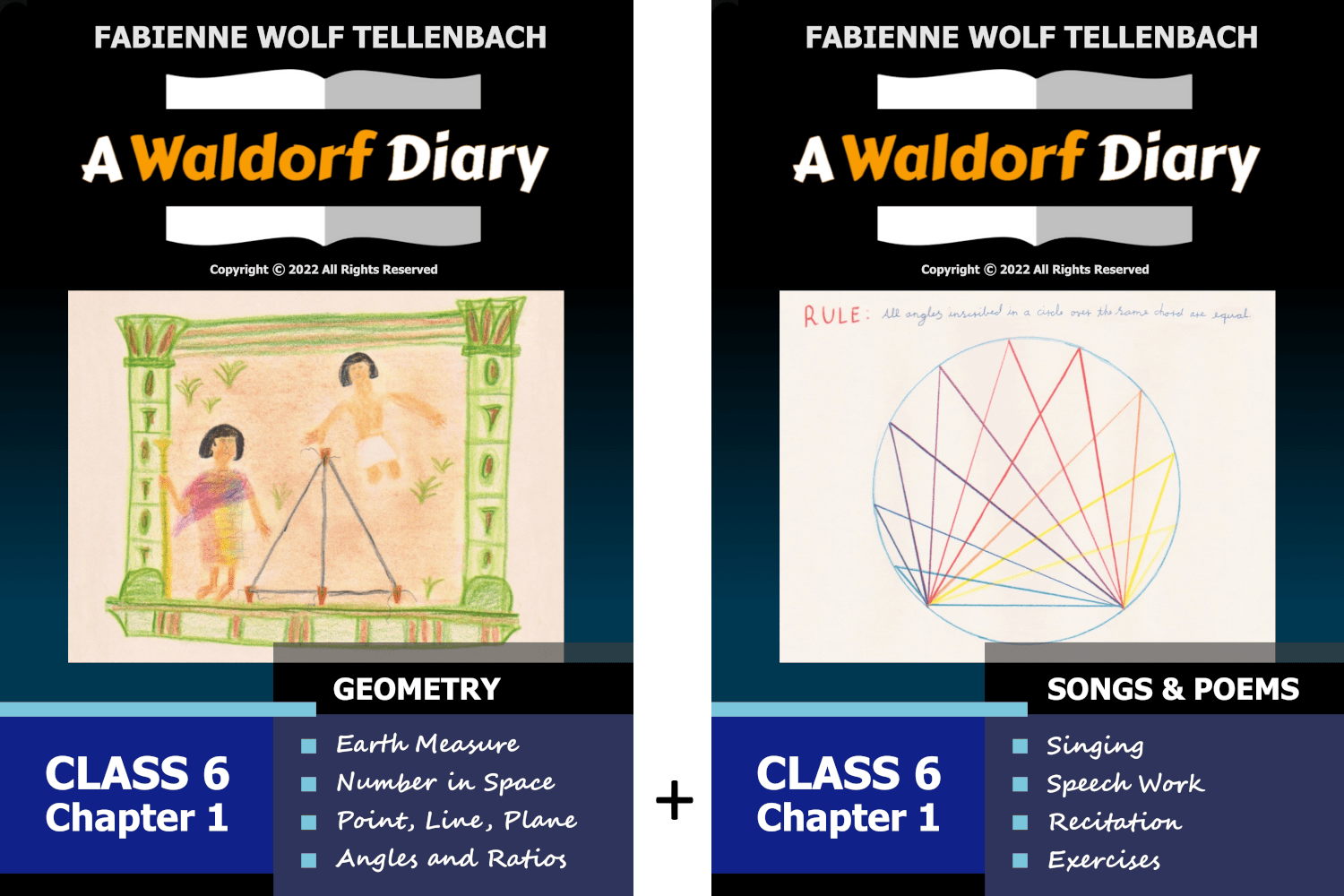
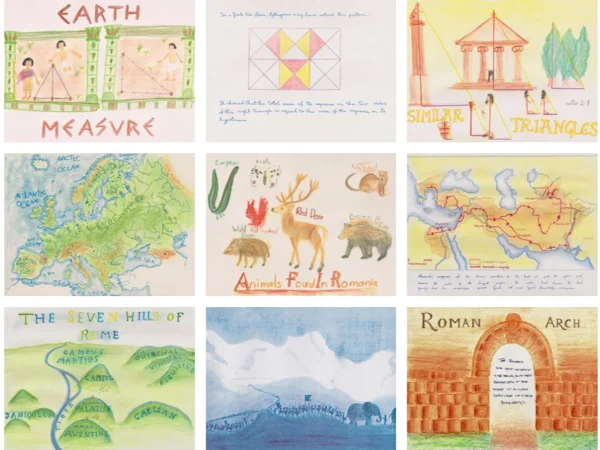
Introduced to accurate constructions with compass and ruler, the pupils hear that geometry was a sacred art in Ancient Egypt, used to stake out fields and build temples, but was loved for its own sake by Greek philosophers.
They discover unchanging and unemotional relationships between points, lines, planes and angles, experiencing the satisfaction that comes from accurate observation and precise construction.
Along the way they meet remarkable thinkers whose discoveries continue to inform our understanding today. Thales, Pythagoras and Euclid compiled axioms which reveal the beauty of mathematical thought.
Pythagoras also declared the earth to be a sphere, and Eratosthenes calculated its circumference in a superb feat of applied logic, needing nothing more than a known distance, shadows at the summer solstice and the laws of angles.
Exploring Our Continent
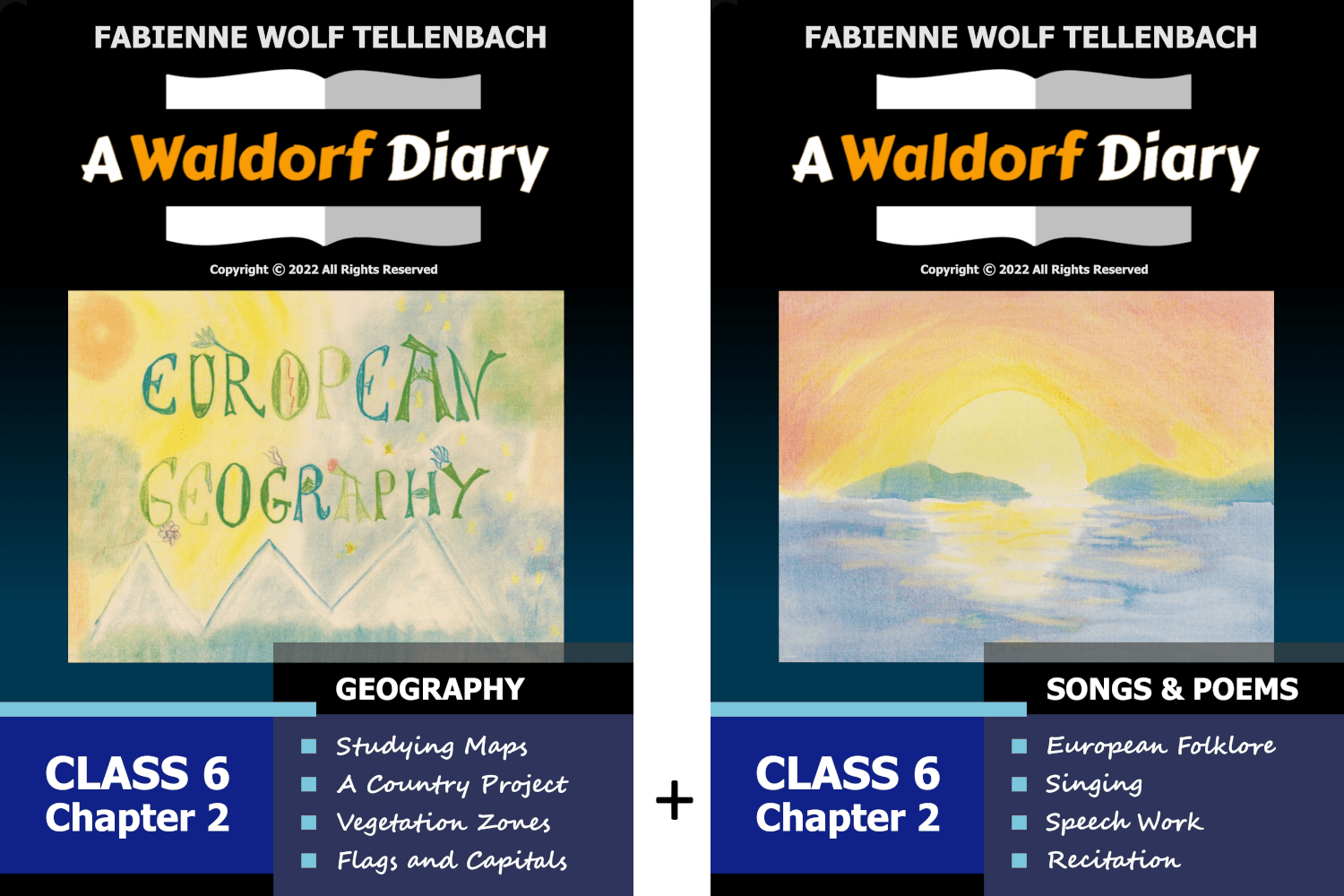
Geography now broadens from local surroundings to the home continent. Its physical features, political boundaries, climate zones and vegetation are explored through the drawing of maps that reveal relationships between landscape, climate and human settlement.
Alongside, each student works independently on a project. They research, organise information, write illustrated summaries and present their work to the class and an invited audience of family members.
These first research projects aim to build and develop independence through self-directed work.
Rome and the Rule of Law
The history of Ancient Rome provides another fascinating perspective on the growing importance of fact-based thinking, order and structure.
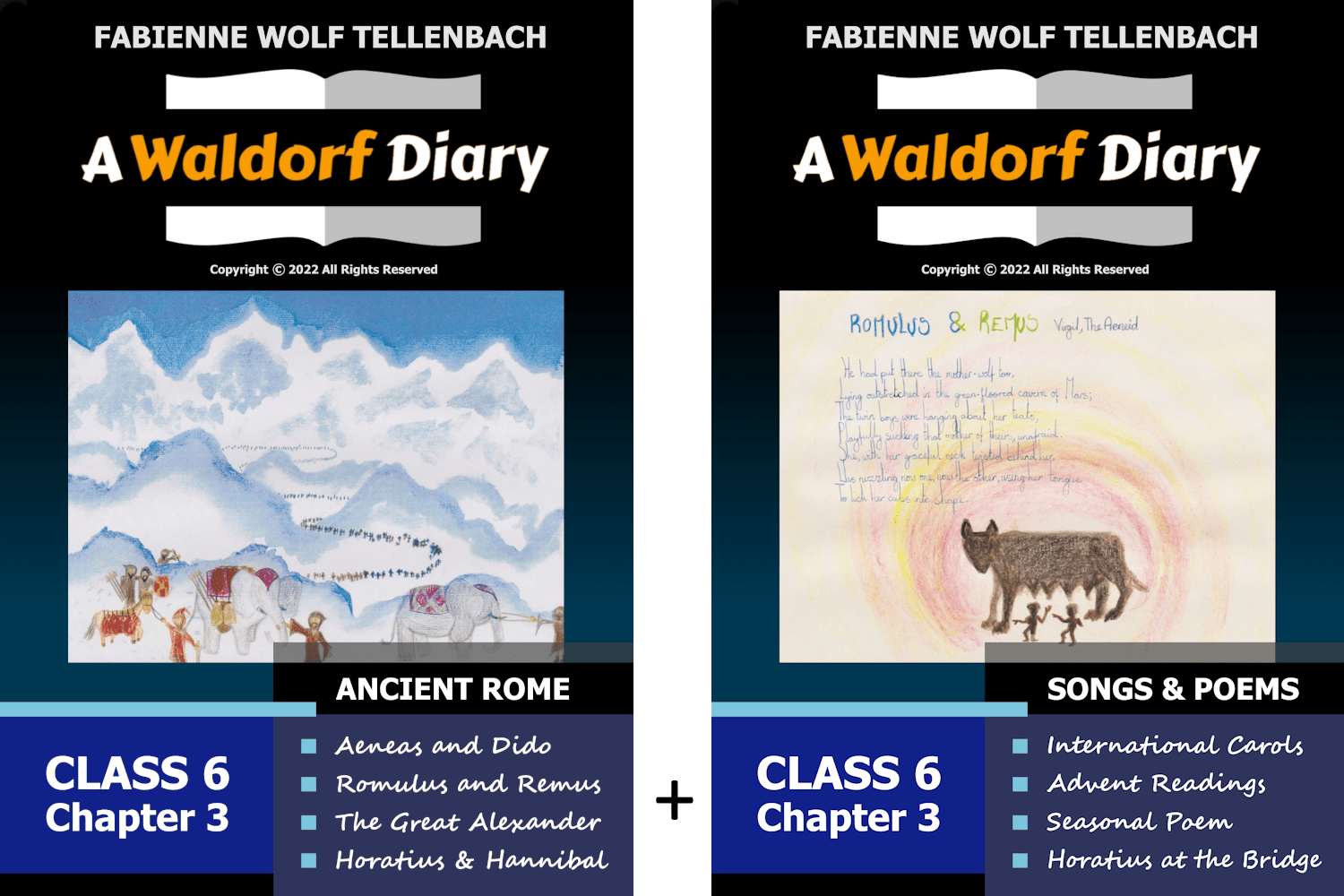
Progressing from Rome’s legendary foundation myths to the Age of Kings and the ideals of the Republic, the children discover how the law, civic virtues and public responsibility shaped an expanding civilisation.
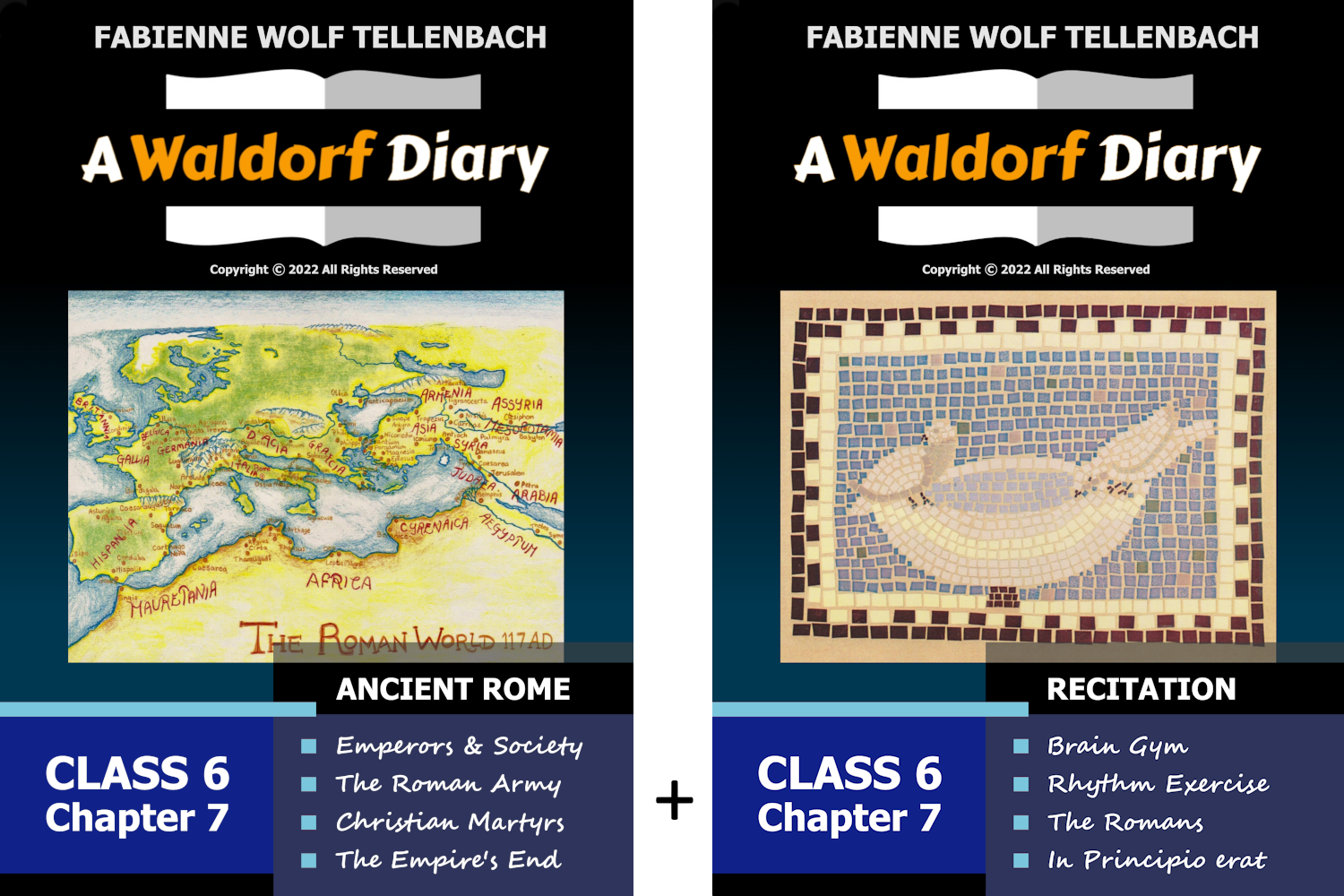
In a second block, the dramatic struggles that transformed the Republic into the Roman Empire reveal how political ambition, a hunger for power and the resulting conflicts determined the course of history.
The persecution of Jews and early Christians, the Colosseum’s gory spectacles and the lives of remarkable historical figures we now know as saints capture the imagination of this age group.
History’s great dramas generally help teenagers to put the dayʼs personal struggles into perspective by engaging their emotions in a vivid narrative of the larger human story.
Learning to Manage Time
Only now does homework become a regular part of school life, set according to a weekly plan. This plan is worked out beforehand by colleagues across the subjects to avoid overload.
Not every piece of homework is due the next day, which creates the need for responsible time management.
Having to organise their own work over several days, the children are learning to plan ahead, meet deadlines and balance different responsibilities – all of which is an important life skill in its own right.
Learning to Revise
The study of the mother tongue also reaches a new level, for now the concept of editing is introduced.
Young children rightfully feel, “I wrote this … Isn’t it wonderful?”
But as the transition to teenage begins, the focus shifts. Now writing is no longer regarded as a finished product created in a single attempt. It becomes a process of repeated drafting, review and improvement.
“How could I make it better?” is the question that marks the beginning of a lifelong habit of reflection, thoughtful refinement and craftsmanship.
A WALDORF DIARY – the classroom log that makes the art of Waldorf teaching visible



Greetings, We are Hebat El Nil School in Egypt, Luxor. Inspired with Waldorf education we have class 6 and we hope to know how to teach the Waldorf curriculum in good ways and your website very interesting in this matter.
Hello Hala, I am delighted if my resources can help to inspire Waldorf work in Egypt. Best wishes for your initiative!