Alongside the study of measuring units, word groups and letter-writing, the central topic of Class 3 is the expulsion from Paradise, also known as the Fall from Grace. This spiritual image illustrates one of the most significant turning points of childhood.
The Third Year: Finding One’s Place in the World
Around the ninth year, we begin to experience ourselves as separate from the world around us. The formerly unquestioned unity of self and world breaks apart, and this new separateness raises disturbing questions:
Can I find my place in the world? Will I be able to look after myself? Do I belong in this family? Is anyone really my friend? I’m afraid that nobody likes me, nobody understands me … Will I be able to manage life’s challenges?
The biblical story of Adam and Eve leaving Paradise offers a powerful picture for this stage of development. Having eaten from the Tree of the Knowledge of Good and Evil, they can no longer remain in the Garden of Eden.
They must learn to cultivate the earth, build a shelter, prepare food, look after animals and master life through their own efforts.
Whether understood as cultural history or mythology, the story speaks to a universal human experience: having to leave the blissful world-unitedness of infancy behind and learning to meet the world with courage and growing independence.
The Nine-Year Change – An Existential Crisis
Parents and teachers notice the changes this year brings: New worries appear; questions about friendship and belonging arise for the first time. The children begin to feel apart and alone without knowing why.
Growing awareness of life’s challenges produces unease or anxiety, and fear of dying may keep them awake at night.
Formerly exuberant, they become more thoughtful and sensitive. Radiant, ruddy faces begin to look pale and drawn. Their carefree attitude changes, and it naturally worries their parents: What is wrong?
Quite simply, the children are crossing the Rubicon and there is no turning back.
Although this period can be unsettling, it is a healthy and necessary step in development. A new level of self-awareness is emerging, and with it comes a growing sense of individuality.
More on the topic in this blog article:
Bible Stories to the Rescue
At this stage, a selection of Bible Stories shows that existential questions, fears and problems can be overcome, offering powerful living images that are deeply reassuring.
Rather than presenting religious doctrine, these stories provide the lens through which the class discovers that the questions now stirring in their soul are part of the shared human experience.
Adam and Eve must leave the safety of Paradise. Noah faces uncertainty. Abraham sets out into the unknown. Joseph overcomes betrayal. Moses leads his people through hardship towards a new beginning …
To realise that they are not alone in feeling alone can bring quiet comfort. These stories speak directly to the imagination, and there they work gently without requiring explanation or analysis.
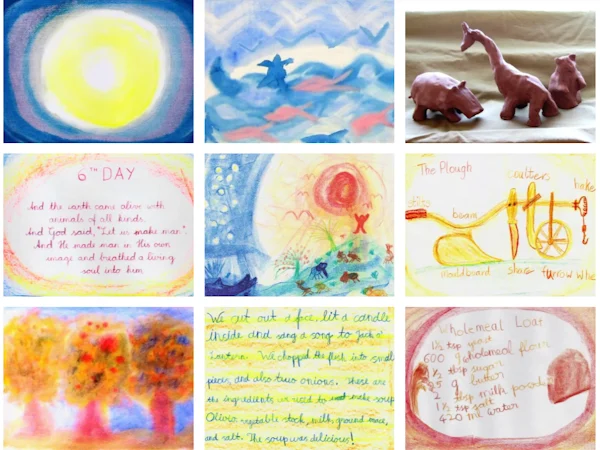
Summarised by the children in writing and illustrated with feeling, Bible stories are told as an important part of a shared and ancient cultural heritage.
A Pastural Culture
The stories are enriched through artistic and cultural experiences. Hebrew folksongs are learnt, together with traditional circle dances that bring harmonious balance to the soul and joy into the classroom.
And as the children draw letters of the Hebrew alphabet with block crayons, they discover an ancient style of writing whose tapering strokes differ beautifully from our own.
Where possible, a member of the Jewish community is invited to teach the class the first lines of Genesis in the original Hebrew: “B’reshit bara Elohim…”
Many Waldorf pupils remember these words for the rest of their lives. Not because they are required to, but because meaningful experiences have a way of staying with us.
Learning to Feel at Home on Earth
As uncertainty about the world awakens inwardly, the curriculum responds with meaningful, hands-on activities that build confidence through experience.
The practical work of Class 3 is of itself a therapeutic answer to existential questions and helps cope with the fact that they no longer feel at one with their surroundings.
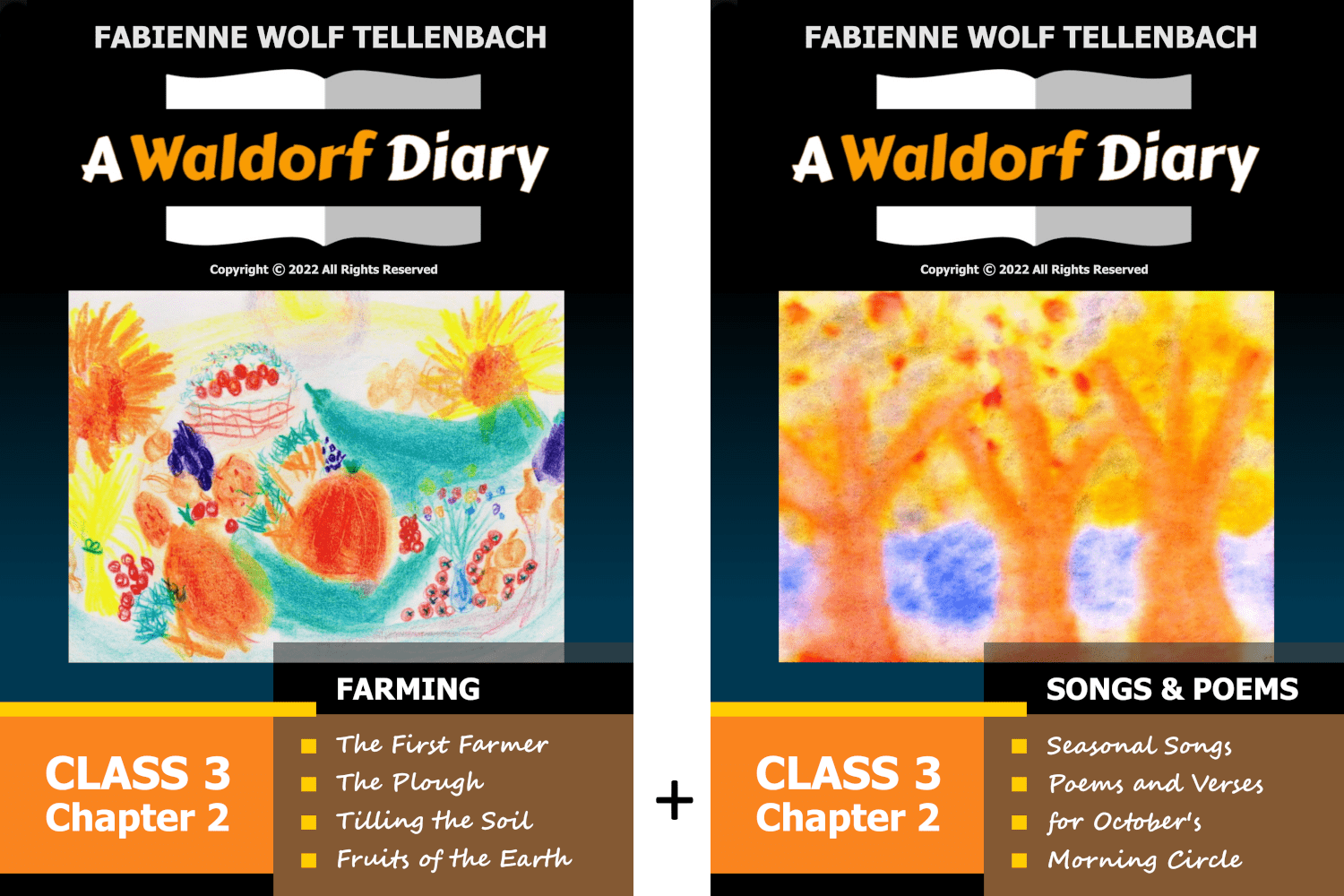
The children plough and sow, harvest grain, thresh it, grind flour and bake bread. They pick apples and pears, press fresh juice and prepare simple seasonal meals together.
Each activity says without words: You can learn to provide for yourself. You can do useful things and meet your needs with capable hands.
Measuring and Building
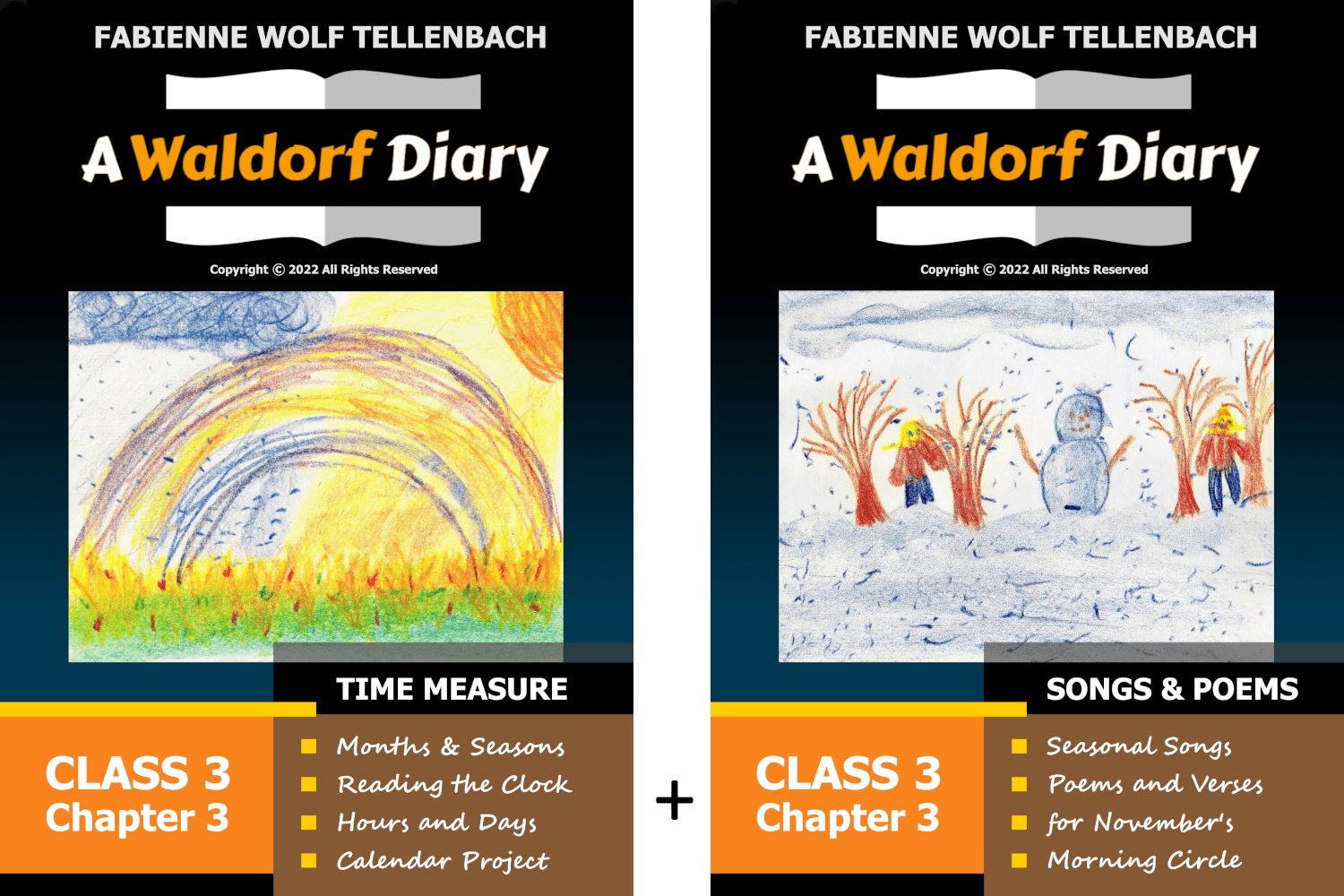
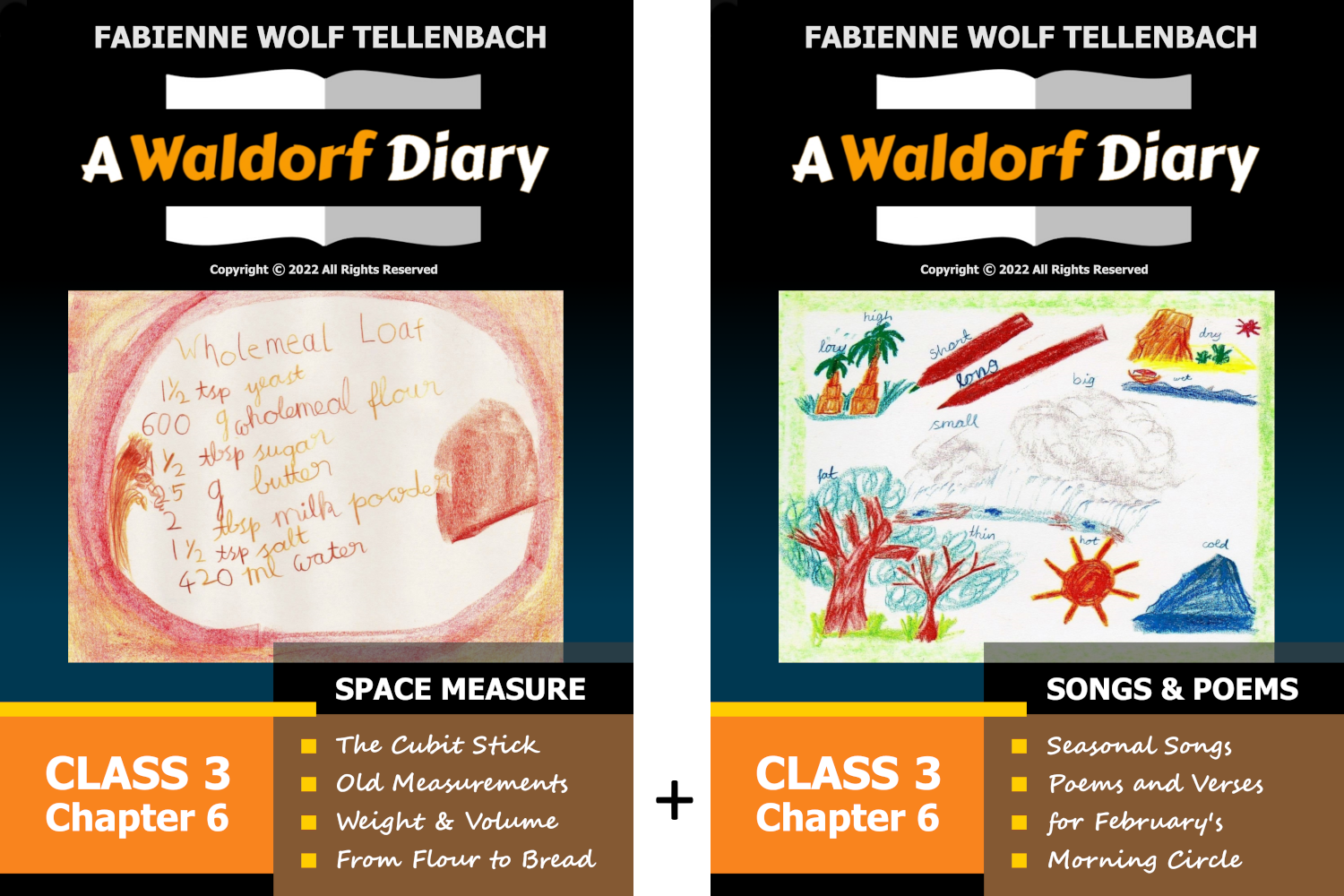
Arithmetic now turns practical too and centres on weighing, measuring and telling the time – skills that help us to navigate everyday life.
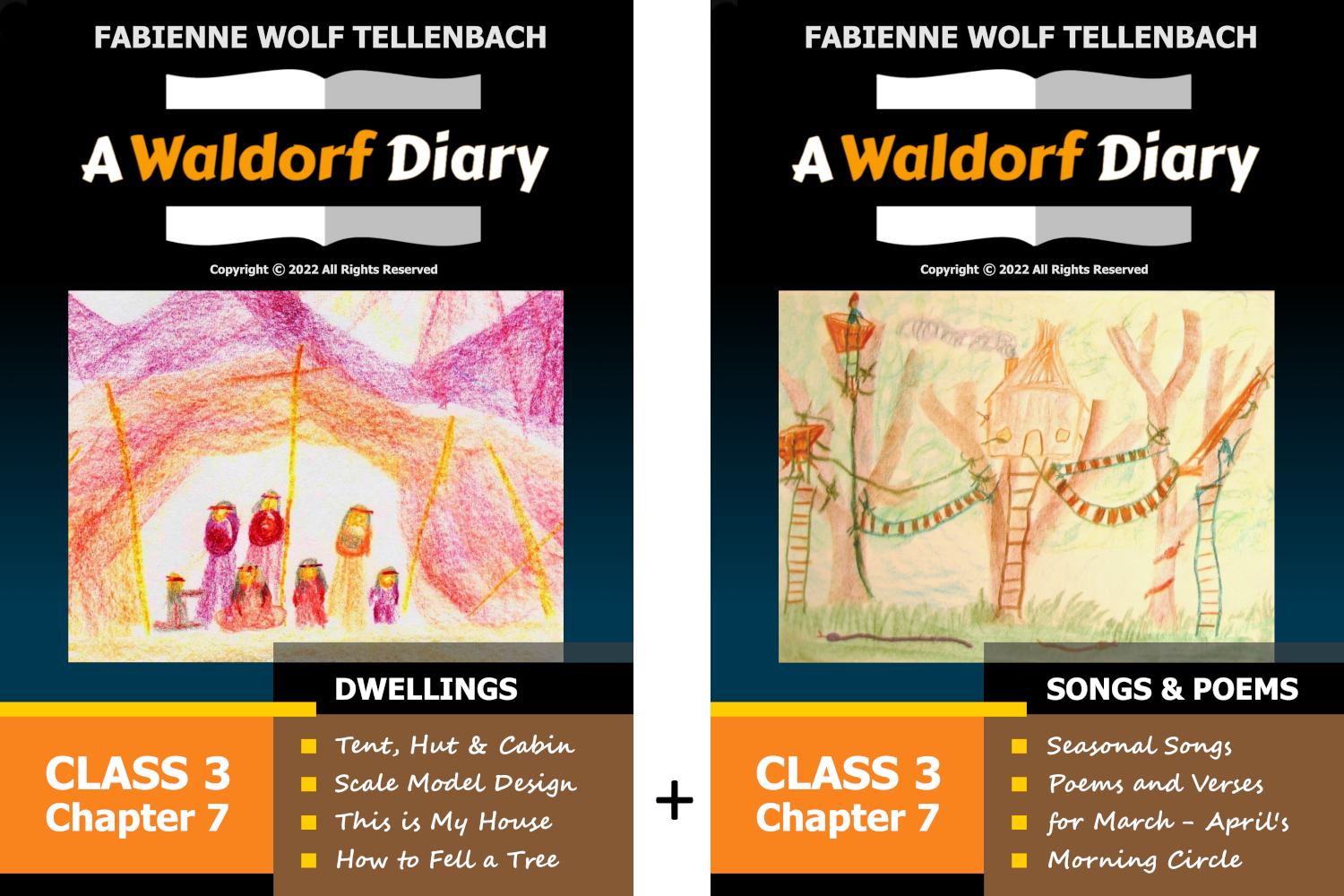
The study of traditional dwellings leads naturally into building projects of their own. With expert guidance they fell a tree, saw timber, mix mortar, lay bricks and construct woodland shelters.
The pride they take in these achievements is unmistakable. “Who would have thought we can do all this?”
Each newly acquired skill replaces uncertainty with confidence in their ability to learn and work and build a life.
Paradise may have been left behind, but another kind of home is beginning to appear: not one that is simply given, but one that can be created through knowledge, perseverance and meaningful work.
Now the earthly realm is opening up before the children, presenting many inviting pathways to be explored with growing confidence and a set of useful manual skills.
A WALDORF DIARY – the classroom log that makes the art of Waldorf teaching visible