Alongside the study of the geography of their own country, the work with decimal fractions and an introduction to botany, Class 5 embarks on a remarkable journey through great civilisations of the ancient world.
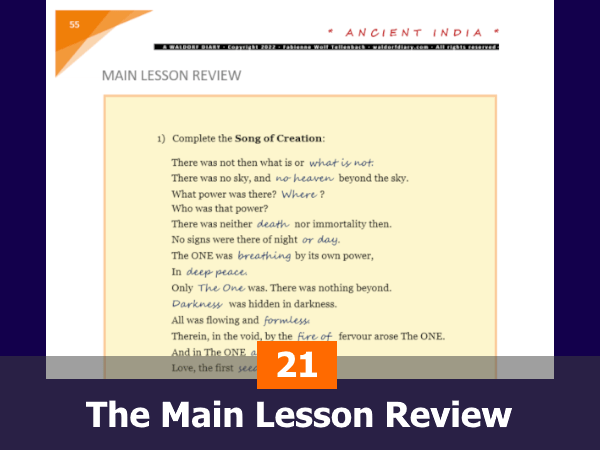
The start of this year is also the right time for introducing the regular Main Lesson Review, a written block test to chart and celebrate individual learning progress.
The Fifth Year: Exploring Humanity’s Journey
By age eleven, the children are ready to look beyond their immediate surroundings and begin with genuine curiosity to discover how people in other times and places understood the world.
The ancient cultures studied in the course of the year take them on an imaginary journey across continents and centuries.
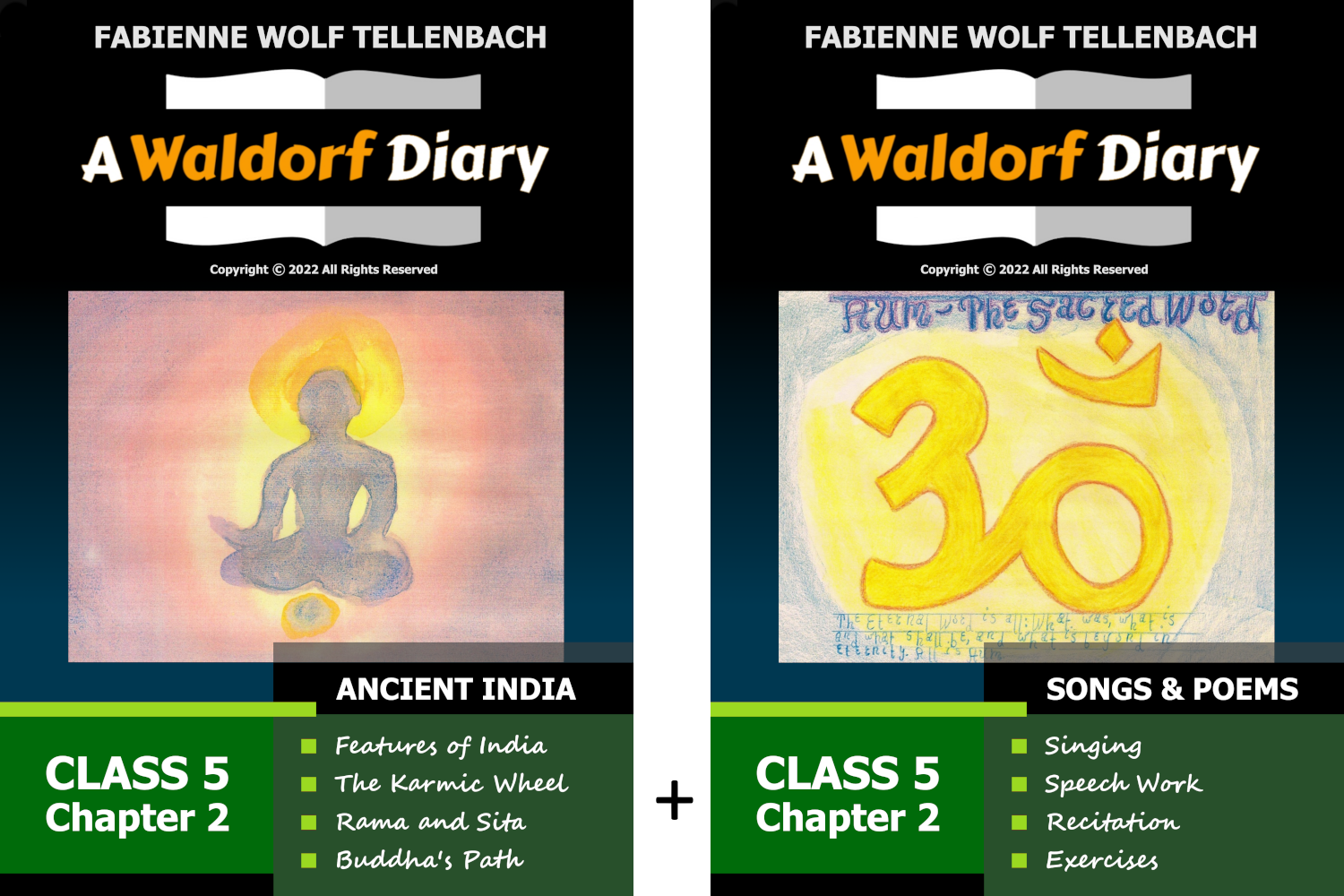
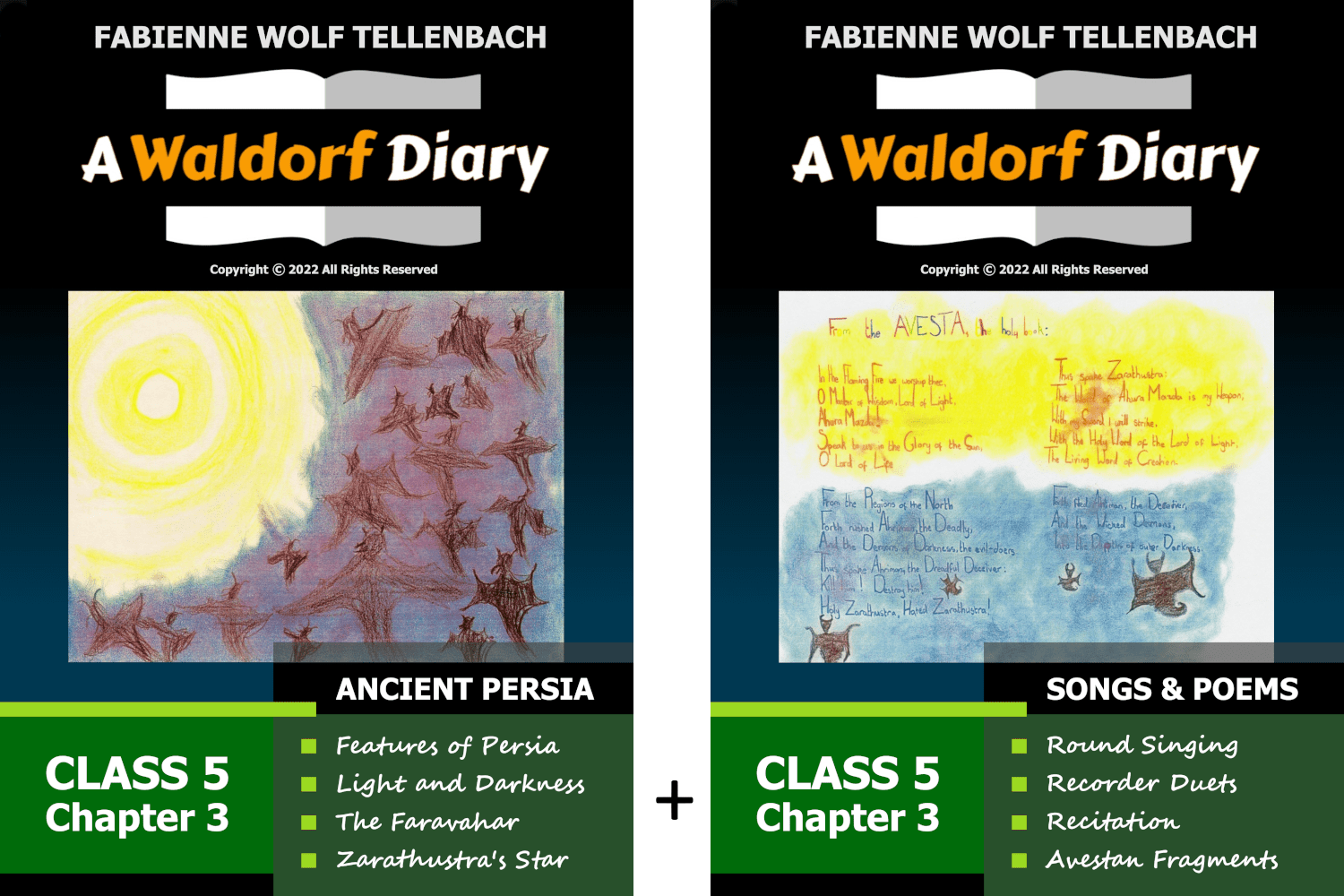
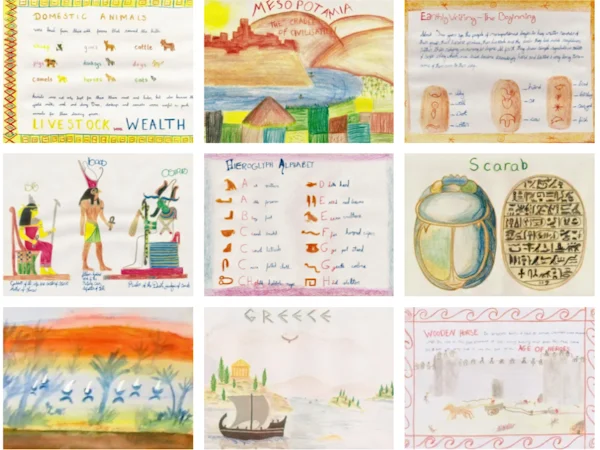
Following the spark of cultural innovation from one region to the next, this journey begins in distant India, climbs the plateau of Persia, descends into the river plain of Mesopotamia and crosses the deserts of Egypt to arrive among the myriad islands of Greece.
Each ancient culture is encountered through its landscape, stories, customs, gods, beliefs and sacred literature; all of which combine to a unique way of living that has made important contributions to the progress of human development.
And as the children’s inner horizon widens to embrace five great cultural epochs, they begin to understand mankind’s unending quest for meaning and wisdom, its hunger for resources, and the need to build and maintain communities.
Many Paths Towards Meaning
Although each culture developed its own particular character, they also had a great deal in common.
Each one sought to understand man’s place in the universe. All asked where life comes from, what happens after death, and how people should live together. The answers they formulated are different, but the questions are remarkably alike.
All of daily life’s aspects stemmed from the gods and referred back to them. Whatever happened was seen as the will of a deity or a demon, and everything was done with a view to pleasing or appeasing the gods.
It soon becomes clear to Class 5 that there is no manifestation of ancient cultural life that did not flow from the central wellspring of a people’s faith.
The children learn that the original meaning of the word religion is “to reconnect” – and that there is not just one way to reconnect, but many. Throughout history, every people sought to reconnect with the spirit world in their own way, thus creating various faiths, sacred texts and ways of worship.
Each cultural age had its particular focus, style and outlook, but all have this in common: Seeking to reconnect this earthly life with the spiritual background they knew to be life’s origin.
Sacred Legends and Texts
In each culture, the main works of literature are holy books, ancient anthologies of praise and prayer and philosophical thought. These literary works are treasured companions that preserve a people’s deepest insights.
India’s Vedas, the Persian Avesta, the Sumerian Epic of Gilgamesh, the Egyptian Book of the Dead – their outlook on the spirit world translates into practical guidance on the right way to live, and to prepare for death; so that, when the soul finally stands before the gods, their judgement may be favourable.
Only the comparatively young culture of Greece has no ancient holy book. Instead, it has the identity-establishing epic poetry of Homer.
Taken together, these texts reveal humanity’s enduring search for goodness, beauty, truth, justice, courage and hope, and invite the children to look beyond the visible world with wonder and respect.
Ancient Wisdom
Manu, Rama, Krishna, Buddha, Ahura Mazda, Zarathustra, Osiris … these are big names with big stories, and Class 5 is captivated by the wisdom that speaks from ancient texts and tales.
The stories inspire thoughtful conversations about life, death and rebirth; about responsibility for one’s actions, and about the likelihood that our earthly lives are part of something greater.
Particularly reassuring is the view – identical in every culture – that death is not the end but the gateway to the soul’s true home.
The Birth of Civilisation
From one Ancient History block to the next, Class 5 takes part in the gradual emergence of civilisation. And the astonishing achievements of ancient engineering, partly remaining as impressive ruins, are silent milestones along the way, showing that practical ingenuity was inextricably linked to religious faith.
The ziggurat of Sumer’s stargazing priests and their inspired division of the circle into 360 degrees, Egypt’s pyramids and its death cult: all of it took place in the wake of an agricultural revolution that transformed nomadic life into settled communities.
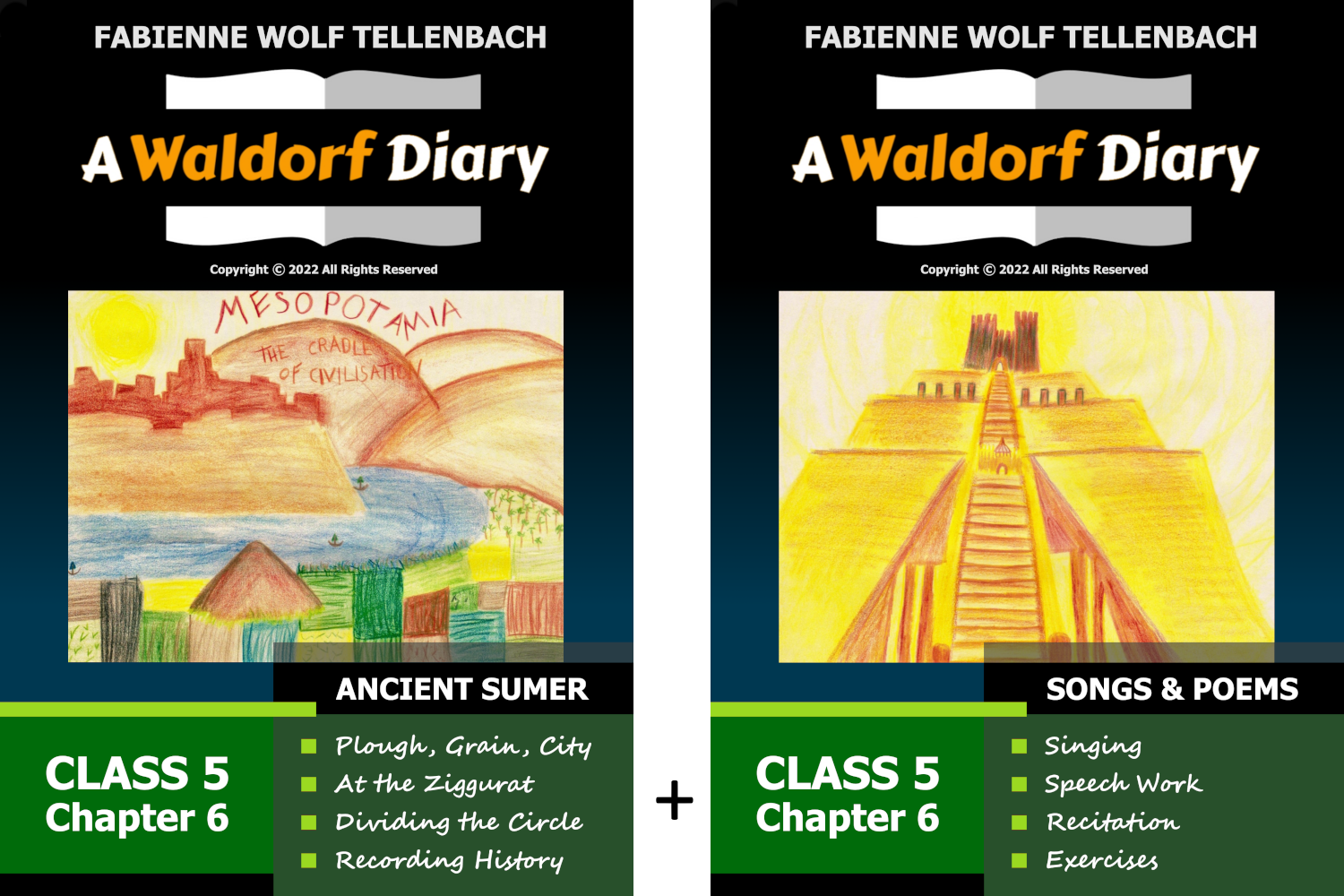
Hitching oxen to the plough made much bigger fields and more abundant harvests possible. Storing the surplus grain fed larger communities and gave rise to the first cities. Trading supplies led to the invention of writing, and writing to the beginning of recorded history … Thus we trace the birth of civilisation.
The Classical Age
The journey of Class 5 reaches its joyful culmination in Ancient Greece, where a pantheon of gods engages the imagination with gripping tales of patron deities and heroes.
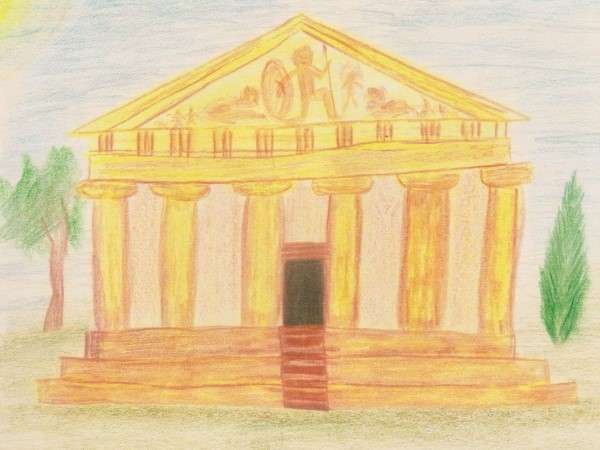
The Greek gods seem strikingly human, full of courage, humour, jealousy, generosity and desire. Homer’s Iliad and the Odyssey captivate the class with adventures of unforgettable heroes.
The year concludes with the children’s own Olympic Games, a celebration of athletic skill, grace, friendship and joyful participation.
After an imaginary journey across thousands of years, Class 5 returns home with a widened horizon and a changed outlook on life.
The greatest gift of this school year is the realisation that despite very different traditions, languages and beliefs, people have always searched for meaning, beauty and wisdom, marking their place within the greater story of life.
A WALDORF DIARY – the classroom log that makes the art of Waldorf teaching visible