
Math gnomes have become a beloved tradition in the Waldorf world. Many find them an enchanting idea and employ them with enthusiasm, others reject them roundly. Here I explore the controversial topic to help you make an informed decision.
A new teacher might easily feel obliged to use math gnomes, getting the impression that they are an original element of the Waldorf curriculum for Class 1.
But they are not. Like the vowel angels, math gnomes are a later and disputed addition.
Where did Math Gnomes come from?
Dr Stephen Keith Sagarin, cofounder and history teacher at the Berkshire Waldorf High School in western Massachusetts, informs us of their source in his entertaining article Free the Math Gnomes:
“[…] Mrs. Harrer dreamed up the math gnomes, wrote them down, and, eventually, published them. Here’s a link to her book: Math Lessons for Elementary Grades. I don’t recommend it. I wish it would go out of print. But if you want to see what I’m talking about, this is the source.
Her math gnomes, which have no basis in Steiner’s work, and which actually contradict his recommendations for teaching math, have become the default position for many or most Waldorf elementary school teachers.”
“Math brings the immaterial, the conceptual, the spiritual into the material world. Steiner recommends beginning with a pile of mulberries. Or beans. Or pieces of paper […]”
It has been observed that fictional stories get in the way of the math concepts one wishes to teach and can hinder the children’s development of number sense.
Literacy goes hand in hand with imaginative stories, but numeracy does not. Some understand it instinctively, as this Facebook comment shows:
“As a homeschooling mother to a grade one child I have not introduced them as I did not understand why math functions required gnomes to be accessible. I really disliked the blurry boundaries for math and science with fantastic imagery. My kids enjoy numbers without magical thinking.”
Using Imagination
Whenever a beloved tradition is questioned, someone will state, “Steiner said to use the imagination” – as if this granted permission to do whatever one fancies.
Yes, he did emphasise the importance of imagination, but it must be matched with two other essential concepts, as we learn from his verse for teachers:
“The need for imagination, a sense of truth, a feeling of responsibility, these are the three forces which are the very nerves of pedagogy. And whoever will receive pedagogy into himself, let him inscribe the following as a motto for his teaching:
Imbue thyself with the power of imagination,
Have courage for the truth,
Sharpen thy feeling for responsibility of soul.”
The Study of Man, GA 293, Lecture 14
Ignoring two parts of this triad easily results in what I call “the Disneyfication of Waldorf”.
By Disneyfication I mean that the three-fold spiritual foundation of our pedagogy is corrupted when:
- Goodness becomes cuteness
- Beauty morphs to kitsch
- Truth is replaced by fantasy fiction
No offense to Walt Disney! In creating wonderfully imagined story worlds in a signature style, he never laid claim to truthfulness.
But Disney is Disney, and Waldorf is Waldorf, and never the twain shall mix and mingle.
Reading Steiner’s responses to ideas the first Waldorf teachers proposed on his introductory course, we see that he was not satisfied with most of what they came up with. (And we sense his growing frustration.)
According to him, the Waldorf teacher’s freedom lies in the choice to accept and apply thoroughly understood methods and concepts.
A Spiritual Error
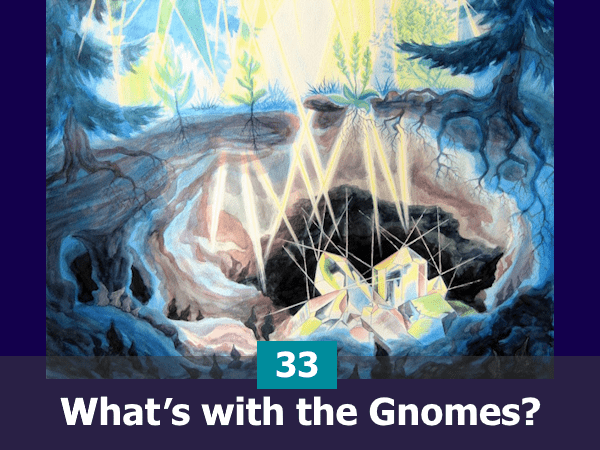
Using gnomes for mathematical operations is easily recognised as problematic when we study Steiner’s description of their spirit reality.
I also recommend Dr Sagarin’s article Teaching Arithmetic Without Gnomes from which I quote:
“One of the challenges is that many or most of those who use math gnomes and their ilk have studied Steiner – maybe even currently study him – and somehow don’t notice that what they read is at odds with the use of math gnomes.
[…] Let’s consider the objections or counter-arguments. These, as I understand them, are two:
First, we are asked to teach imaginatively and artistically, and imagining mathematical operations as little beings is imaginative and artistic – or can be.
For instance, here is Steiner on this topic, ostensibly:
“[…] all the instruction given for geometry, and even for arithmetic, must not fail to appeal to imagination. We appeal to imagination if we always make an effort to have the children use their imagination, even in geometry and arithmetic.” (Foundations of Human Experience, 209)
“We must permeate all of our teaching with an element of art.” (Practical Advice, 4)
“It is a fact that all mathematical material taught throughout the school years must be presented in a thoroughly artistic and imaginative way. Using all kinds of means teachers must strive to introduce arithmetic and geometry artistically, and here, too, between the ninth and tenth years, teachers must go to a descriptive method.” (Soul Economy, 207)
I would say that gnomes fail to meet any one of these considerations. They have the gloss of imagination, of imaginative teaching, but they introduce something false into the process. […]
The second argument in favor of using math gnomes is this: I (or a respected colleague) have used math gnomes, and the students liked them and learned math successfully.
This is, unfortunately, no argument at all. Human beings learn math using all kinds of methods, even bad ones.
Steiner […] is concerned that we use examples from real life to connect the otherwise abstract world of math with its proper place in the world.
We awaken genuine interest and enthusiasm (and awakening these requires artistic teaching) when we don’t sensationalize our work by adding gnomes, but link our students’ activity to what they know of the activities in the world and lead them to a conceptual understanding of mathematical truth and beauty.”
Gnomes through the Ages
Such rational arguments, addressing the intellect, are effective when preaching to the choir; but affection for gnomes – often mixed with cherished childhood memories – takes place on the emotional level.
Few of us are good at examining our feelings and opinions rationally, and so the dear math gnomes become a controversial and divisive topic in the fundamentally peace-loving Waldorf sphere.
A look at the evolution of the gnome concept can give us a clearer picture that may be helpful here.
As mythological creatures of European folklore rooted in Greek and Roman traditions, the idea of gnomes began to thrive with the superstition of the Middle Ages.
Initially pictured as mountain demons, gnomes were associated with the mining for metallic ore: tiny gnarled men, often mischievous, sometimes malevolent, never reliable.
16th Century Gnomes
In the age of the Renaissance, the Swiss alchemist Paracelsus described elemental spirits in ‘A Book on Nymphs, Sylphs, Pygmies and Salamanders, and on the Other Spirits’, introducing gnomi as plural of gnomus, ‘earth-dweller’.
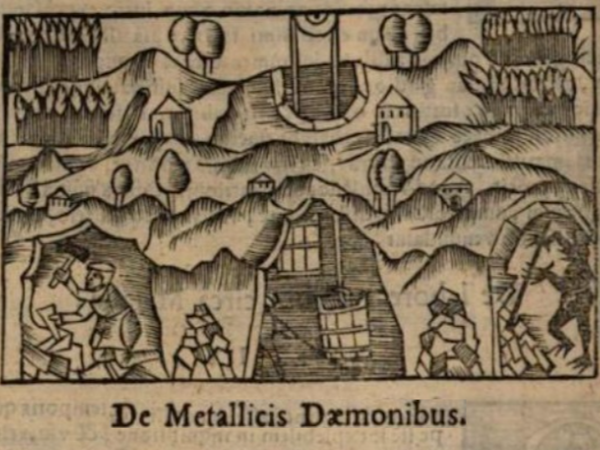
His contemporary Agricola, a supervisor of mines, wrote of the ‘Mountain Spirit’ and inspired the German legend Berggeist – a story the Brothers Grimm would later feature in their collection.
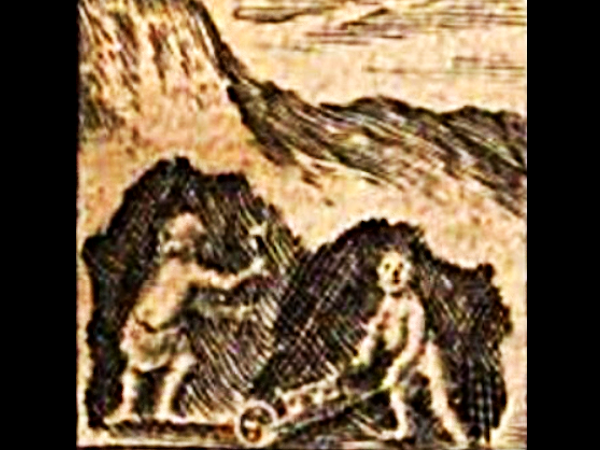
The printing press made illustrated books widely available, spreading stories of gnomes far beyond the folklore of miners.
17th Century Gnomes
As a result, gnome figurines of clay or stone began to appear in the grounds of Italian villas.
These Gobbi harked back to small statues of the fertility god Priapus, set up in the homesteads of Ancient Rome to protect vines and olives, livestock and beehives.
18th Century Gnomes
No longer regarded as purely esoteric beings, gnomes began to play roles in folktales with a moral message. They were seen as guardians of nature, and of hidden treasure in underground realms.
And a new fashion became all the rage among the aristocracy of Italy, France, Germany and England:
Noblemen adorned their parks with a picturesque purpose-built hermitage, dressed a hired man in the garb of a druid and impressed guests with this living ornament.
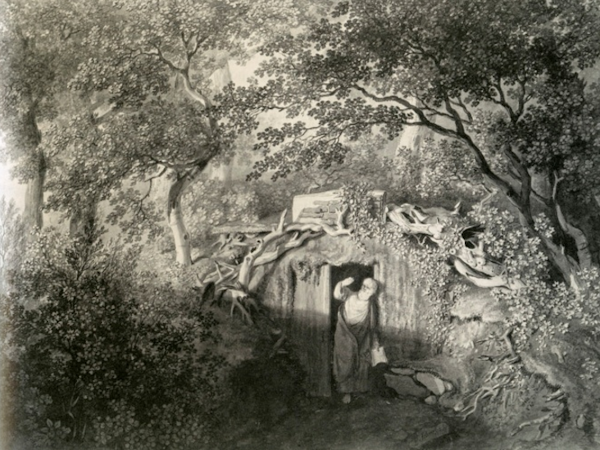
As an eccentric status symbol, the ornamental hermit was a forerunner of the garden gnome.
19th Century Gnomes
In the Victorian age, gnomes suddenly had the century of their lives. Why? Because a number of simultaneous developments supported their meteoric rise to stardom:
- Romanticism in art and literature
- Back to Nature movement
- Folklore revival
- Grimm’s collections of fairy tales
- Gnomes now linked to household spirits, dwarfs and kobolds
- Invention and manufacture of garden gnomes
The pagan gnomes also snuck into the Christian traditions of Advent and Christmas, especially in Scandinavia and Germany.
Fairy Tale Gnomes
In 1812, the Brothers Grimm published their first collection of old German legends, titled Kinder- und Hausmärchen (Children’s and Household Tales).
The brothers Jacob (1785-1863) and Wilhelm (1786-1859) Grimm were German academics who collected, published and popularised folk tales: Cinderella, The Frog Prince, Hansel and Gretel, Town Musicians of Bremen, Little Red Riding Hood, Rapunzel, Rumpelstiltskin, Sleeping Beauty, Snow White, The Gnome, and many more.
Video of a quirky storyteller presenting The Gnome with British humour.
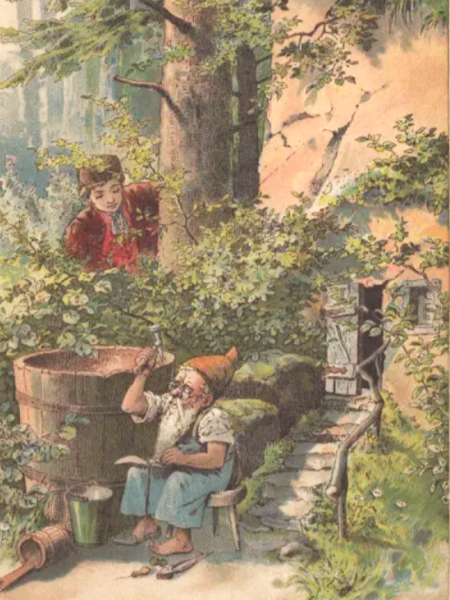
All subsequent editions featured illustrators who developed the fairy-tale imagery in their own style, decade by decade.
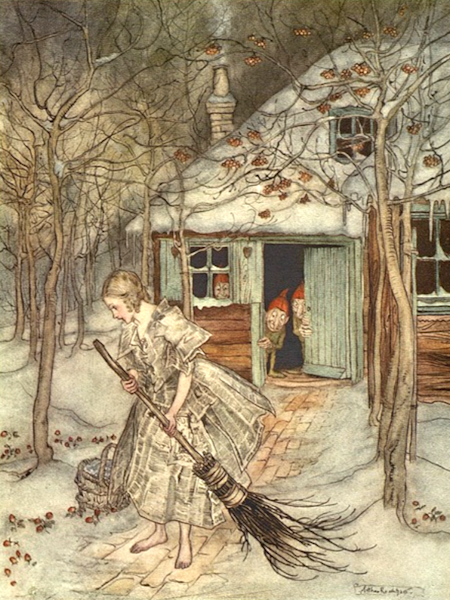
These tales and their idyllic illustrations permeated childhood throughout Europe. They were a unifying influence across the divides of nations and social class, a common factor.
In the course of this century, many people experienced intense economic pressures, brought about by the radical changes of the Industrial Revolution.
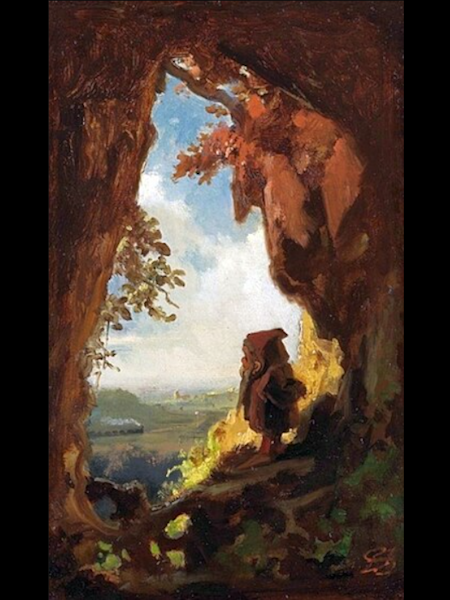
On top of this upheaval, the potato blight caused Europe’s Great Famine, and large parts of the population suffered abject poverty on the brink of starvation.
No wonder, then, that people of all ages sought to escape their misery by delving wholeheartedly into a fantasy world where integrity, diligence and patient suffering are rewarded by gnomes and elves and Father Christmas.
During these hard times, migrants transported beloved folktales on ocean liners to other continents – the New World of their hopes and dreams.
Garden Gnomes
At the same time, ornamental Gartenzwerge were created in a German town specialising in ceramics, and the talented sculptor August Heissner played his part in making these garden gnomes a must-have accessory.
Not long, and they migrated across the Channel to populate the grounds of Britain’s country estates.
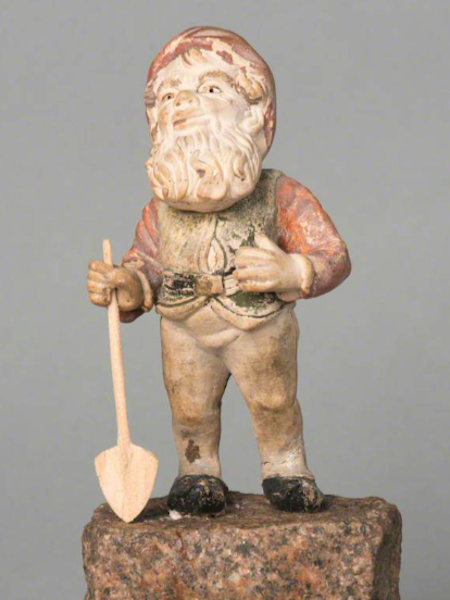
These figurines of handpainted terracotta were status symbols, a link with nature and bringers of good fortune.
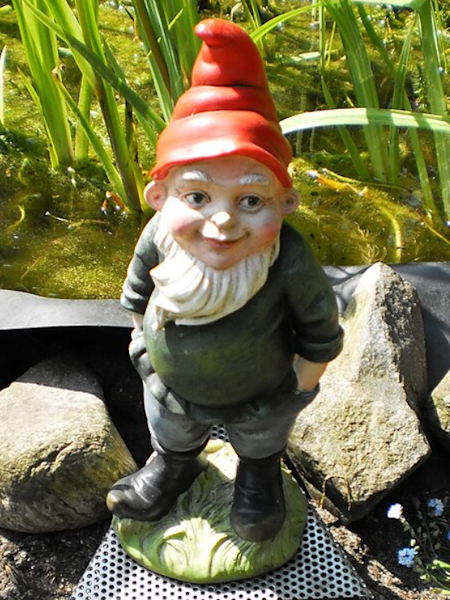
With mass production came a decline in quality and taste, making garden gnomes representative of bourgeois kitsch and parochial attitudes.
Gnomes in the 20th Century
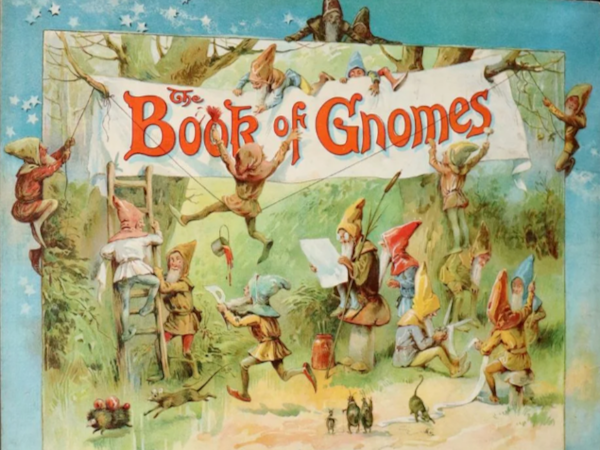
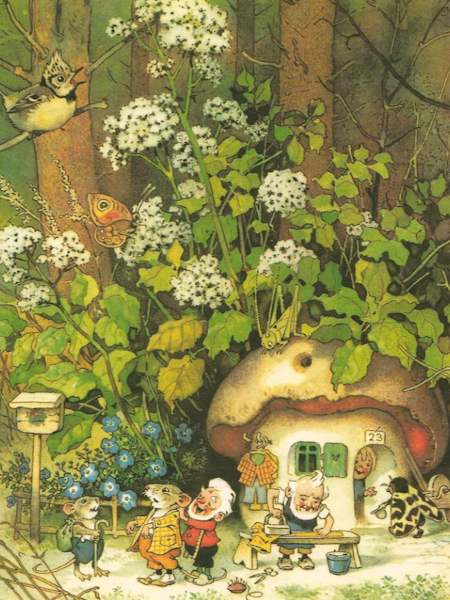
Gnomes continued to be beloved characters and were featured in countless storybooks for children, all of them charmingly illustrated.
In the war-torn first half of the century, the garden gnomes fell out of favour. Their popularity waned, not least because of their German origins.
But the equally Germanic fairy-tale gnomes received an unexpected boost in 1937, when Walt Disney (1901-1966) released his first animated feature film, Snow White and the Seven Dwarfs.
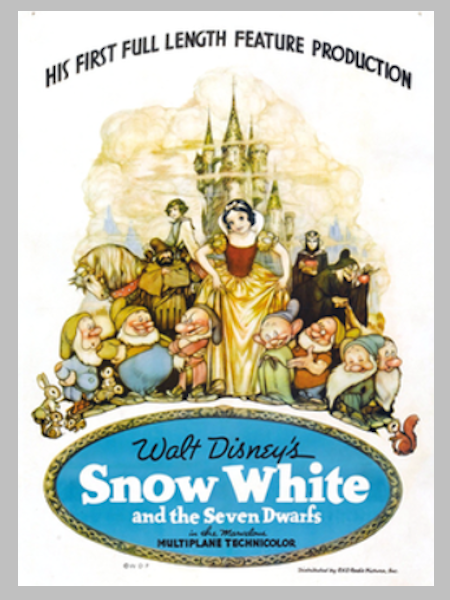
And because Disney’s cute dwarfs resembled them, garden gnomes became popular once more.
Materialism and Spiritual Renewal
The achievements of the 19th century transformed the cultural life of Europe and the United States profoundly.
Through great progress in every field of science, technology and business, the general mindset became more and more materialistic – and with it the idea of gnomes.
In this situation, Rudolf Steiner (1861-1925) dedicated his life’s work to a renewal of spirit awareness and taught a deeper understanding in a contemporary manner.
He described the 19th century – obsessed as it was with technology, colonialism, exploitation and profit – as a Dark Age in terms of human evolution, a low point requiring a choice: to continue on the path towards world destruction, or to change course with a different mindset that values and respects the material and spiritual aspects of all things equally.
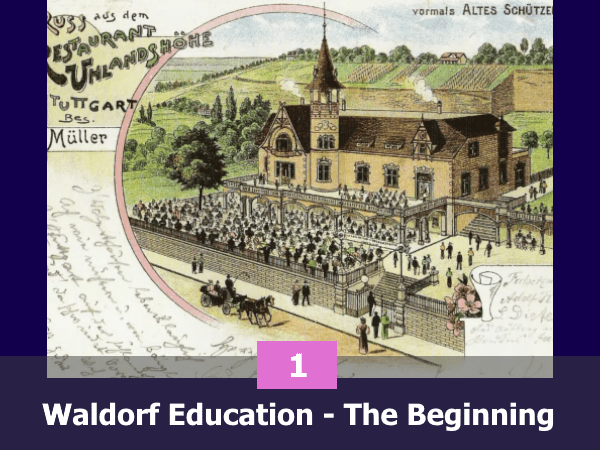
To change the mindset of grown men is an impossible task, and so Steiner was delighted when Emil Molt approached him with the request to found a school.
At this school, children would learn not to negate the spirit background of the world. Art, science and non-denominational religion would be reunited in a way that was harmonious, practical and grounded in reality.
Rudolf Steiner’s Gnomes
The earth-spirits Steiner described owe nothing to history, folklore and tradition. Speaking of gnomes as someone with direct experience of their reality, he saw them thus:
“The root spirits are quite special earth folk, invisible to outer view but in their effects that much more visible; for no root could develop if it were not for that which is mediated between the root and the earth realm by these remarkable spirits which bring the mineral element of the earth into flux, in order to conduct it to the roots of plants. I am of course referring to the underlying spiritual process.”
He did not produce drawings of gnomes and never mentioned them in his recommendations for teaching.
Gnomes don’t do Math
In fact, his descriptions are the reason why seasoned Waldorf teachers are sometimes heard to say, “Gnomes don’t do math!”
“For these root spirits are in their spiritual nature entirely sense. Apart from this they are nothing at all; they consist only of sense, a sense which is at the same time intellect, which does not only see and hear but immediately understands what is seen and heard.”
The gnomes Steiner speaks of are pure spirit, “the forces underlying the earth-processes” that have nothing in common with us except intelligent sense perception.
In this they surpass our capabilities by far, perceiving “the ideas of the universe” in every moment.
And that is why gnome-spirits don’t do arithmetic: they simply have no need for it.
By contrast, we humans know from painful experience that math problems are hardly ever solved by instantly grasping what is seen and heard.
This being so, we must learn (and teach) rules and processes which allow us to work out results step by step.
A Matter of Definition
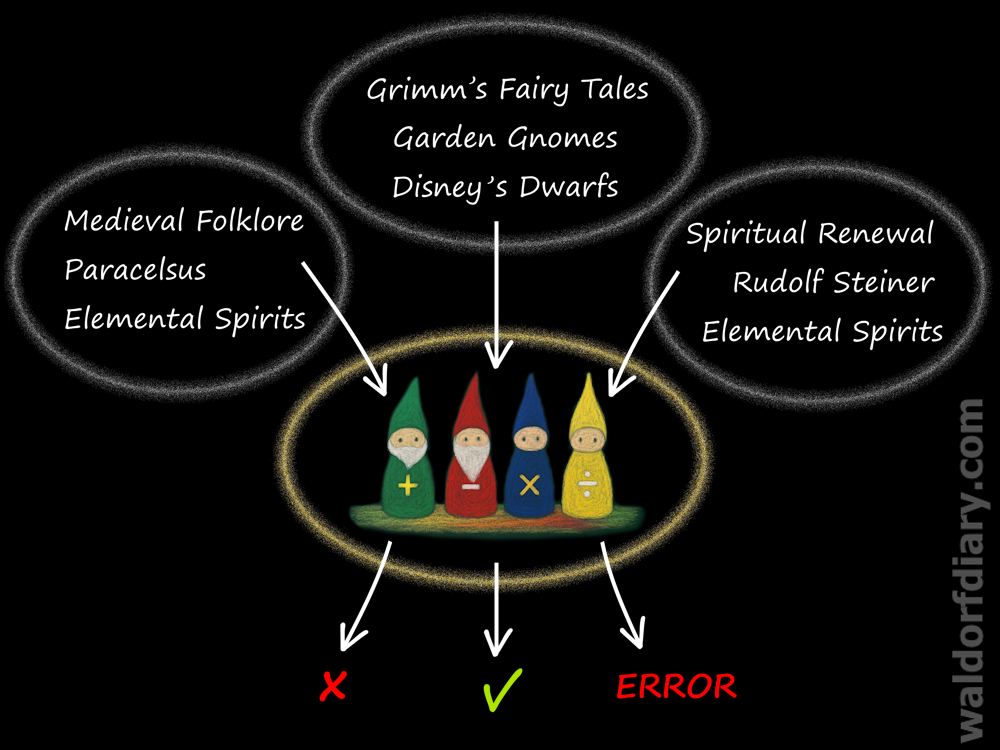
We now see that what is commonly called gnome is a blend of interwoven historic threads: medieval miners’ lore, fairy tales, storybooks, lawn ornaments and movie characters.
And, in effect, the gnomes one meets in our settings are the popular Victorian mixture which has been rebranded Waldorf Gnomes.
Understanding the difference between the historic concept and Steiner’s authentic insight helps to reach a decision for our teaching.
To Gnome, or not to Gnome …
Should you wish to employ Victorian-style gnomes in math lessons with Class 1 – well, they can be pictured as doing practically anything, so why not basic arithmetic too.
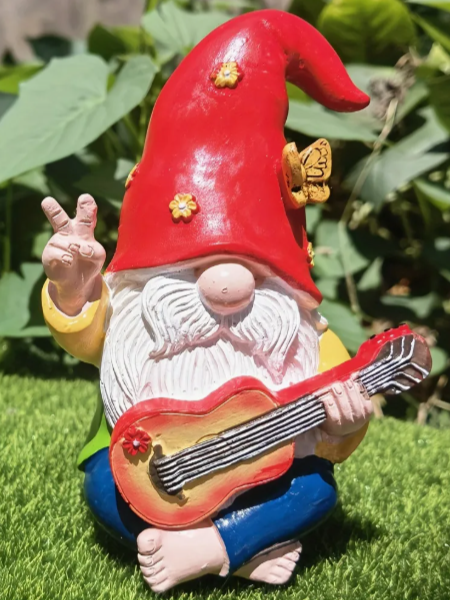
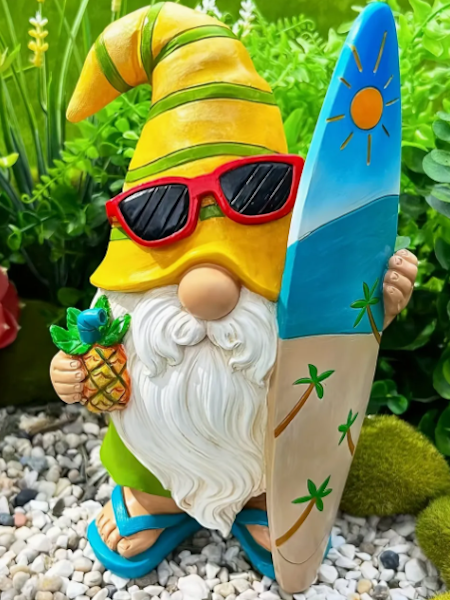
But if you want to be true to Steiner’s spiritual impulse and insight, then math gnomes are ruled out by default.
In Waldorf Education, the basic operations of arithmetic can and should be taught gnome-free, and it is easy and interesting to do so.
A WALDORF DIARY – the classroom log that makes the art of Waldorf teaching visible



This is, in form and content, a long overdue debunking of a really unhelpful myth. As the article describes, Steiner is emphatic about relating maths to practical life before exploring its abstract beauty, and experts would of course say the same. I love the simplicity of his explanation of the four processes using a torn sheet of paper. So mathematically and didactically we can do a lot better! Let’s also spare a thought for the poor gnomes, should you share Steiner’s ideas about benevolently active nature spirits. This practice has sentimentalised them every bit as much as Walt Disney has!
Please, Fabienne, can you research next the awful and still very wide-spread practice of learning times tables up to 12x the number, “because 12 is more spiritual than 10”? Countless Waldorf children have been mis-taught the beauty of the decimal system for this spurious reason, and mostly by teachers who would protest loudly that “we mustn’t teach anthroposophy in Waldorf schools”! BTW, this only happens in the English-speaking world, where decimalisation is of course a “really recent thing” (1972 in the UK, I believe?)
Thank you for your thoughtful feedback, Sven, it is always appreciated. And big thanks for sharing this article with your online community! It brought new readers from around the globe, validating the time and effort spent on researching this topic.
As for the custom of learning multiplication facts up to 12x the number: I am surprised to hear of this esoteric justification. I did it for purely practical reasons, wanting the children to know the mathematically interesting and generally useful 11x and 12x tables too. And since 5 x 12 is also 12 x 5, for example, it naturally extended the number space to the beautiful square number 144. Later we went further, memorising the highly relevant 25x table in connection with common fractions and decimals. To know the multiples of 15 is also handy for mental arithmetic – and surely all of this multiplication practice demonstrates the beauty of the decimal system.
Fabienne’s wonderfully clear post really brings to light these “Waldorf traditions” that have come into play and totally undermined the original ideas presented by Rudolf Steiner. In this information overload of the 21st century, teachers seem to rely more on what they find on Pintrest etc than research the source. I believe in the teachers’ freedom to bring their material in their own way, but it should always be based on a deeper understanding of Steiner’s indications. I am not speaking as one who has never used the gnomes but as a teacher that has tried it both ways, and honestly, the amount of imagery used theses days can be very distracting of the concepts we are trying to teach. Thanks, Fabienne 🙏🏻
Thank you, Donovan. It is gratifying to know that my work resonates with knowledgeable readers, and also highly motivating. Always good to hear from you!
I am again impressed by Fabienne’s thorough and insightful presentation of the subject. Without hectoring or admonishing, she provides enough background information and cultural context that allows us to recognize the validity of her view that gnomes have no place in the teaching of arithmetic (or anything else). Thank you Fabienne, for all you are doing to keep Waldorf education true to its spiritual impulse.
Thank you, Roberto, for your kind words! As always, they mean a lot to me. I must say that I find it fascinating to look into these topics, mining deep like gnomes do (chuckle) and presenting my discoveries for the benefit of future educators. That said, I am not totally opposed to the use of gnomes in teaching, as my previous gnome post shows. But I do think people should investigate the concept, understand it more clearly to reach an informed personal decision, and not use them simply because everyone else does.